Animal Assisted Therapy
Interventionist (AAT-I) Credential Program
Enroll in the Online Self-Study and complete the certification training on your schedule.
25.5 CE hours available for behavioral health clinicians
What if the missing element in your treatment approach isn’t another modality—but another species? The Animal Assisted Therapy Interventionist (AAT-I) Online Credential Program equips behavioral health clinicians with the clinical, ethical, and practical competencies to incorporate animals into the therapeutic alliance—enhancing client rapport, deepening insight, and expanding treatment possibilities across settings and populations.
Whether you’re curious about equine-facilitated psychotherapy, seeking to support clients with ADHD, trauma, or anxiety, or looking to integrate a trusted companion into your counseling space ethically, this comprehensive 8-course online program offers the guidance and structure to do so with confidence.
Earn your AAT-I Certificate and save $275 on this 8-course credential.
$1000 – 25.5 CE hours · full program access
Dr. Christina Strayer, Ed.D., LCMHCS, AAT-I, brings decades of experience as a licensed counselor, animal-assisted therapist, evaluator, and educator. Her doctoral research focused on AAT, and her work with animals—including dogs, goats, horses, and even crustaceans—embodies the heart of this field. She is a sought-after presenter and the lead instructor for the AAT-I program.
Dr. Strayer takes a client-centered, holistic approach grounded in evidence-based theory. With engaging examples and experiential guidance, she empowers clinicians to translate their professional orientation into ethical and effective animal-assisted interventions.
This online certificate program explores the theoretical foundations of AAT, best practices for animal selection and training, multicultural and ethical considerations, treatment planning, outcome tracking, equine-facilitated psychotherapy, and the integration of AAIs into work with clients across the lifespan and care continuum. Case examples, practical demonstrations, and interdisciplinary strategies help learners build knowledge they can immediately apply.
Instructor
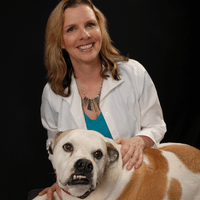
Dr. Christina Strayer, Ed.D, LCMHCS, AAT-I, THTC, CYT-200, NLC-P, is a Licensed Clinical Mental Health Counselor and Supervisor, Licensed Clinical Addictions Specialist-Associate, Pet Partner Team Evaluator, Animal Assisted Therapist-Interventionist and Life Coach with her coaching practice Energy Coaching with Horses and Others (E.C.H.O.) in North Carolina. She is trained in a variety of Integrative Therapies including Art, Yoga and Mindfulness. Her theoretical approach is Client-centered and Holistic. Along with her mini goats, avian, equine, canine and crustacean helpers, Christina combines her study of the power of the Human and Animal Bond in healing with proven counseling theories and techniques to guide clients in reaching their goals.
She has a diverse background in counseling and teaching. She is the Lead Instructor for the Animal Assisted Therapy Interventionist (AAT-I) certification course. She has served as an adjunct professor at Campbell University in the Counselor Education department. She has traveled and conducted AAT seminars for PESI, a national continuing education organization and conducts Seminars/Workshops/Groups locally on a variety of Mental Health/Wellness topics. She primarily works in the areas of PTSD, Panic Disorder, Crisis Intervention, Compassion Fatigue, Stress, Trauma, Grief and Loss, Anxiety, Addictions, Depression, Goal setting, Consultation, Self-Esteem, Conflict resolution, Social Skills, Team Building and Life Balance/Transitions.
Christina graduated from the Doctoral program in Counselor Education and Supervision through Argosy University in Sarasota, FL. She obtained both a Master of Science in Counseling and Human Development with a concentration in K-12 School Counseling and a Bachelor of Science Degree in Psychology from Radford University in Radford, Virginia. She completed her Doctoral dissertation in AAT with Dooli, a rescue English Bulldog/Boxer mix, who was a dear family member and a beloved therapy dog to many over the years.
Key Takeaways:
- Incorporate animals with intention: Learn to ethically and effectively blend animal-assisted interventions with your theoretical orientation and treatment goals.
- Expand your clinical reach: Discover how AAT benefits diverse clients—across diagnoses, settings, and developmental stages—and how to match interventions accordingly.
- Ensure safety and effectiveness: Develop competencies for client screening, animal selection, risk mitigation, outcome tracking, and advocating for your co-therapist.
Why this Certificate Program?
- Comprehensive and credentialed: This is the only self-paced, 25.5-hour online program that leads to the AAT-I designation, backed by a trusted CE provider.
- Led by a true practitioner-scholar: Dr. Christina Strayer's career embodies both clinical depth and experiential wisdom in the field of AAT.
- Designed for real-world practice: Learn how to begin, sustain, and evaluate an AAT practice—whether you're working in schools, clinics, hospitals, private practice, or the community.
Learning Objectives:
Upon completion of "The History of AAT and AAT Principles" course, participants will be able to:
Define the Human-Animal Bond, its importance in AATC and its effect in human interaction
Explain the rationale for Animal Assisted Interventions (AAI), Animal Assisted Activities (AAA) and Animal Assisted Therapy (AAT)
Describe the theoretical framework/Biophilia hypothesis for Animal Assisted Therapy
Upon completion of the "AAT Competencies and Multicultural Considerations" course, participants will be able to:
Explain the ACA and Pet Partners Core Competencies for AAT-C
Describe various ethics, laws, risks, and multi-cultural considerations that must be factored into the practice of AAT
List the key elements of triadic relationships and being your animal’s best advocate in an AAT setting
Upon completion of the "Animals as Co-Therapists: Selection, Behavioral, and Training Considerations" course, participants will be able to:
Explain how to understand and know an animal’s temperament, how different animals signal their needs and/or stress levels, and how you can facilitate the animal’s socialization, desensitization, and comfort in preparing them for work in ATT
Identify how to objectively assess an animal’s suitability, strengths and limitations for the therapy setting and how to select the appropriate training for you and your animal for AAT
Identify key elements of animal care and advocacy, and the topic of Zoonosis and its implication in AAT
Upon completion of the "Introduction to Equine Facilitated Psychotherapy" course, participants will be able to:
Describe the evolution of EFP and the difference between EFP, Therapeutic Riding, and Hippotherapy
Define the roles of the mental health professional and the equine specialist in EFP, and differentiate models of interaction between the horse, client, mental health professional, and the equine specialist in EFP
List important elements within EFP of horse behavior, reasons horses may or may not be suitable, and specific benefits to populations shown to benefit from EFP
Upon completion of the "Animals as Co-Therapists: Blending Animal Interventions with a Range of Professional Theories" course, participants will be able to:
Explain attachment theory, how an animal as a co-therapist can provide a corrective attachment experience for your clients, and the different means by which the human-animal interaction can elicit unexpected vulnerability and disclosures in others
Match AAI’s with a variety of evidence-based counseling theories, explain how you would incorporate AAI’s with your theoretical orientation to support the population with which you choose to work
Describe how to assess the suitability, amenability, and related safety concerns of each client to animal-assisted interventions in counseling
Upon completion of the "Animals as Co-Therapists: Exploring Animal-Assisted Interventions Across Professions, Settings, and Populations" course, participants will be able to:
Explain key elements that factor into the effective matching of AAIs with clients’ needs/goals and how AAT can increase empathy in clients
Identify how AAT can be utilized in a variety of settings that include: group, crisis, trauma, ADHD, autism, speech and physical/occupational therapy, anxiety, grief/loss, substance use, aging, medical and correctional settings, including examples of specific animal-assisted interventions
List specific health considerations that must be factored into client interaction with animals in a medical setting
Explain the “inner Zoo” and how to have animals as co-therapists in Group Settings
Upon completion of the "Developing Treatment Plans and Tracking Outcomes" course, participants will be able to:
Explain how to write a treatment plan with goals and objectives utilizing AAT
Describe various AAIs that relate to building empathy, developing emotional regulation skills and client self-esteem, creating a corrective attachment experience, and working with anxious or depressed clients or those who have ADHD
Explain the importance of using outcome measures in AAT
Identify the different types of outcome measures that can be used to measure the effectiveness of AAT interventions
Upon completion of the "Animal-Assisted Therapy Overview and Experiential Examples" course, participants will be able to:
Explain the Biophilia Hypothesis and its connection to the Human-Animal Bond
Describe the Psychosocial, Emotional, Physiological Benefits of AAT
Identify the dangers and risks associated with practicing AAT
Describe the competencies necessary to ethically and effectively practice AAT
As you seek to bridge the clinical and the intuitive, theory and presence, people and animals—this program offers clinicians a structured, research-informed path to ethically integrate animals into their professional work, thereby enriching both client outcomes and practitioner engagement.
Add this certificate course to your cart to begin learning instantly.
This is a non-interactive, self-study program and consists of over 25.5 hours of video instruction, reading assignments, written assignments, post-tests, and evaluations.
Upon completion of all 8 online courses, individuals will earn the AAT-I and can begin using the credential AAT-I.
Textbooks are required to complete AAT-I learning content. Reading material is not included with course enrollment and must be purchased separately from retail booksellers. (See "Course Details" tab for specifics)
Select each tab for course details
Availability: From the time of registration, you have twelve months to access the coursework.
Who Should Attend: This course is intended for clinicians who provide behavioral health services.
Teaching Methods: This is a non-interactive, self-study course. Teaching methods for this course include recorded lectures, videos, a post-test, and a course evaluation.
How to attend: Directions for completing a course can be found by clicking here.
This course was updated September 20, 2023
Testimonials
Iveyana Kiara Smith
Jessy Hainbach
Bryant Wilson
Ben Keyser
Mei Chan
Meghan Co, LCSW-C, LICSW