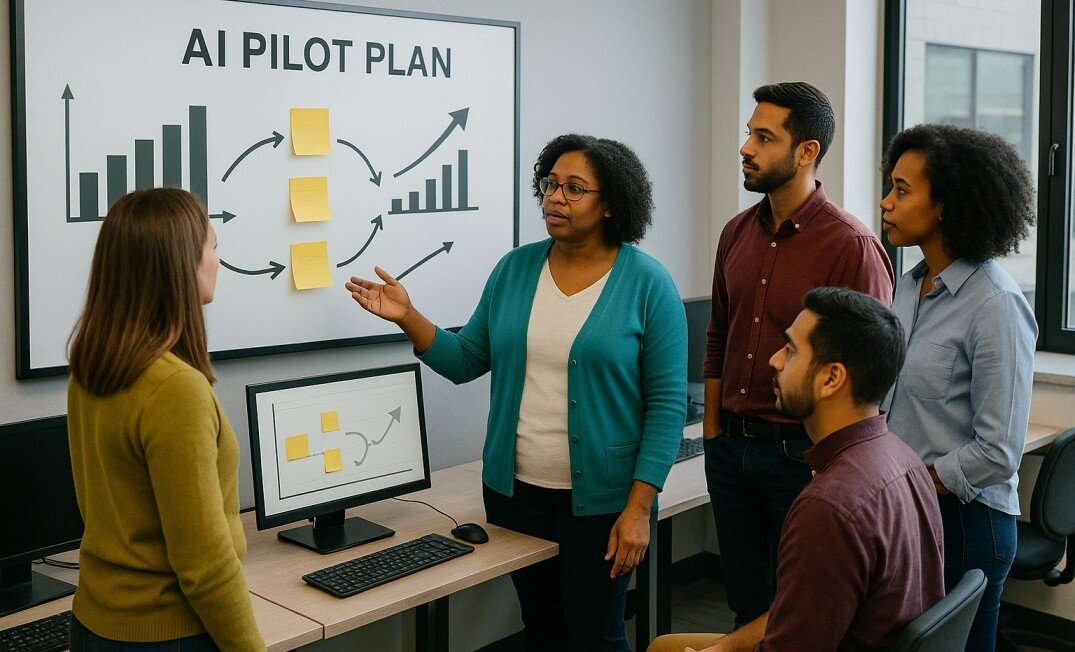
The rapid evolution of Artificial Intelligence (AI) offers unprecedented opportunities to enhance clinical training in behavioral health. However, integrating new technology into an established curriculum requires a thoughtful and strategic approach. A pilot program provides a structured way to explore AI's potential, evaluate its effectiveness, and make informed decisions about adoption.

The field of behavioral health education is increasingly emphasizing competency-based education (CBE). Driven by the demands of accreditation bodies, employers, and the public for greater accountability, CBE focuses on ensuring that graduates have mastered the specific knowledge, skills, and attitudes required for effective clinical practice. This approach moves beyond traditional measures of learning, such as course grades and completed practicum hours, to emphasize direct observation and empirical evidence of competence.

Feedback is one of the most critical components of the learning process, particularly in developing the complex skills required for behavioral health practice. While feedback itself is valuable, the timing of its delivery significantly impacts its effectiveness. Traditional models often involve delayed feedback, which can impede skill acquisition. The integration of Artificial Intelligence (AI) offers a powerful solution by providing immediate, specific, and objective feedback in real-time.

The field of behavioral health is undergoing a significant transformation driven by Artificial Intelligence (AI). From AI-powered diagnostic tools to virtual reality exposure therapy, AI is reshaping how mental healthcare is delivered. As these technologies become integrated into clinical practice, it is crucial that behavioral health education programs prepare students for this evolving landscape. This involves developing AI literacy and ensuring students are equipped to navigate the challenges of licensure.

The transition from classroom learning to the first practicum placement is a critical developmental milestone for behavioral health students. It is also a period often marked by significant anxiety. Students worry about their ability to apply knowledge in real-world settings and manage challenging clinical situations. This anxiety can impede learning, reduce self-efficacy, and affect performance.

The rapid advancement of Artificial Intelligence (AI) has introduced a wave of innovative tools designed to enhance clinical training. However, the effectiveness of these technologies is not solely determined by their sophistication; it is also heavily influenced by how seamlessly they integrate into the existing educational infrastructure. For universities, this means integration with the Learning Management System (LMS).

The integration of Artificial Intelligence (AI) into behavioral health education offers exciting opportunities to enhance clinical training. However, adopting these tools also entails significant risks and responsibilities. Universities must carefully vet AI vendors to ensure their products are ethically sound, pedagogically effective, and compliant with legal and professional standards.

When a graduate student in a behavioral health program struggles to meet competency standards, developing a formal remediation plan is a critical ethical and professional responsibility. This process is essential not only for supporting the student's development but also for ensuring the quality of clinical care and upholding the profession's standards (Elman & Forrest, 2007). However, creating remediation plans is often a significant source of stress for faculty, requiring precision, objectivity, and strict adherence to organizational and legal requirements.

Clinical supervision is widely recognized as the signature pedagogy of behavioral health training, essential for developing clinical competence, ethical reasoning, and professional identity (Bernard & Goodyear, 2019). However, the effectiveness of supervision is often contingent on the supervisee's ability to engage actively and reflectively in the process. For many students, particularly those new to clinical practice, supervision can be a source of significant anxiety, hindering their ability to utilize this crucial learning opportunity fully.

Case studies have long been a cornerstone of behavioral health education, providing students with opportunities to apply theory to practice and develop critical thinking skills. However, the transition from analyzing a static case study to engaging in a dynamic clinical interaction is a significant leap. Students need opportunities to practice the skills of assessment, intervention, and therapeutic communication in environments that reflect the complexity and unpredictability of real-world practice.

In the field of behavioral health, the mastery of complex theoretical frameworks is essential. However, the true artistry of clinical practice lies in the effective application of foundational micro-skills. These seemingly simple behaviors—active listening, reflection of feeling, open-ended questioning, summarizing, and confrontation—are the building blocks of the therapeutic alliance and the primary vehicles for change. Research confirms that the therapeutic relationship is one of the most consistent predictors of positive client outcomes across different treatment modalities (Flückiger et al., 2018).

The challenge of preparing behavioral health students for the nuanced realities of clinical practice is timeless. While classroom instruction provides the essential theoretical foundation, it often fails to fully bridge the gap between knowing and doing. This "skills gap"—the disparity between academic knowledge and practical application—is a common concern among educators and clinical supervisors. As the complexity of mental health needs increases, the demand for innovative training methods that ensure clinical readiness has never been greater.
Testimonials
Iveyana Kiara Smith
Jessy Hainbach
Bryant Wilson
Ben Keyser
Mei Chan
Meghan Co, LCSW-C, LICSW