
By Dr. Mark A. Stebnicki
Disclosure: This article was drafted with the aid of generative AI using content from our proprietary courses. It has been extensively reviewed, edited, and verified for accuracy by Dr. Mark A. Stebnicki.
Introduction
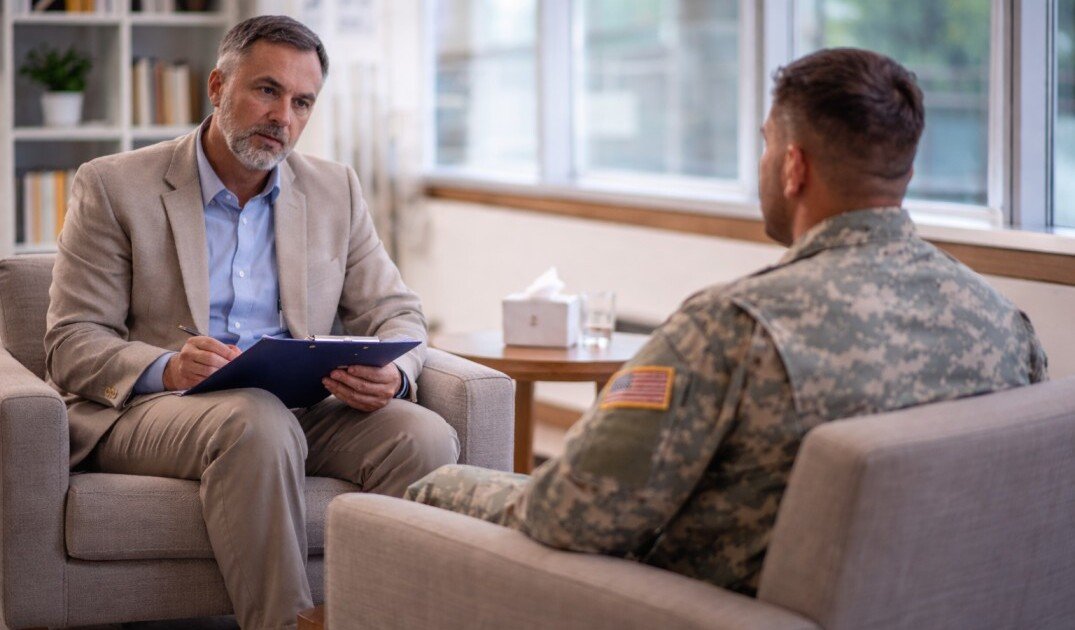
When I sit across from a service member or veteran, I’m not just meeting another client in my busy schedule. I’m also meeting a representation of an individual that has been forged by boot camp, basic training, understands the chain of command, rules of engagement, military branch served, unit rituals, and the unspoken norms of the military culture. It is vital to be mindful that my active-duty or veteran clients are a representation of individuals that have been immersed, indoctrinated, and have assimilated from civilian into the military culture. It is also an indicator of how they reflect which branch of the Armed Forces they serve or have served.
These are the essential elements to be mindful of when implementing the educational and therapeutic mission of Operation Military Counseling (OMC). In other words, being mindful of the unique cultural aspects of the military culture and all the within group differences that are mission critical. Accordingly, serving as a competent and ethical clinical military counselor means earning the circle of trust which is foundational to OMC. This approach becomes integrated in every aspect from the comprehensive clinical assessment, person-centered empathetic approaches, cultivating the therapeutic relationship, and motivating your military client for optimal mental health and wellbeing outside of session.
This article will closely examine how indoctrination in the military culture shapes the client relationship and working alliance with military clients. I will walk through the elements of indoctrination that emphasize what I have learned with over 30 years of practice, research, and training other practitioners to work effectively with the military culture.
📌 Military Indoctrination
When I use the term “military indoctrination,” I’m not talking about brainwashing newly enlisted recruits to be a warfighting robot war-machine, or conditioning them into a radicalized political or religious cult. I’m talking about an intentional physical, mental, and behaviorally intensive process. This begins in boot camp or basic training and continues throughout one’s military career. This includes, but is not limited to the following factors, and is based on the six branches of the U.S. military served (Army, Navy, Marines, Air Force, Coast Guard, Space Force):
- Boot camp and basic training
- Military schools of advanced training
- Military terminology and jargon
- Understanding military verbal and non-verbal communication
- Military rituals and traditions
- Military rules, codes of conduct, and laws
- Military organizational structure and chain of command
- Family values — eating, sleeping, working, and socializing together
- Shifting from the “I-me” to a “Team member” identity
The above elements are a culturally-contextualized process. It has existed in the military for centuries. It is discussed within multiple books such as The Art of War - founded on the classics of Eastern philosophies found in the Tao Te Ching, Confucianism, and more. The U.S. Armed Forces is designed to take civilian recruits and prepare them for a role where the mission and unit come before one’s personal needs. It becomes your new family where one’s career is integrated both within your personal and professional life.
As a Team member you develop a spirit of work aligned with a brother/sister hood. Your actions are influenced by how you communicate with other unit members, command structure, and others in authority. Military indoctrination is critical to all missions. It is “head-on-a-swivel” because the life and safety of others is dependent upon your quick and decisive actions during critical moments. Good indoctrination predicts how well the Soldier, Sailor, Marine, Airman, Coastie, or Guardian will do during combat operational stress, how they will handle critical mission needs, mission creep, finding solutions and flexibility within the mission, and how they will develop trust with others around them for thriving and surviving.
Competent clinical military counselors are mindful of the military indoctrination process when engaged in comprehensive clinical assessments, understanding your service member or veteran’s verbal and meta-communication, level of motivation for therapy, and cultivating optimal wellness strategies outside of session. Earning the circle of trust with your military clients requires practitioner experience, clinical supervision, personal reading/research, and specific training in understanding the specific and within group differences of the military culture. Overall, it is paramount to understand that there is not just one military culture. Rather, the military consists of different racial/ethnic groups, men, women, persons from various geographic locations within and outside the U.S., a range of mental, emotional, neurocognitive, and physical strengths, and understanding of the mission needs of each six different branches of the military.
🧠 From Chain of Command to the Therapy Office
Military mental health researchers document the barriers related to serving the mental health needs of active-duty service members, DoD personnel, and veterans. These include, but are not limited to:
- Difficulty getting time off for appointments
- Not knowing where to go for help
- Negative perceptions and attitudes towards seeking mental health
- Embarrassment about seeking mental health vs. medical health services
- Fear that mental health counseling will harm their career
- Fear of losing a security clearance
- Fear of losing the ability to carry weapons
- Worry that unit members will lose confidence in them
- Fear of being seen as mentally/emotionally weak
Despite the increased ability for service members to access wellness services, such as the Army’s Holistic Health & Fitness (H2F) programs, the emphasis in the military has been primarily on the mental and physical demands within a mission-forward environment. Some aspects of the service member’s indoctrination experiences have more of a focus on the critical needs of the unit and staying close to “the mission.” Whereas, there tends to be less emphasis on the mental health and wellness needs of the individual, regardless of where the service member is at during the deployment cycle.
The military culture is built around rank and structure. Service members learn who they have to report to, who reports to them, and overall where they fit within the chain of command. In my experience, it is essential to clarify your role, regardless of whether you are an active-duty, veteran, or civilian mental health provider. Take time early-on to describe your professional background, what the intention is within the therapeutic process, that they are in a confidential and safe environment, and that you are not affiliated with their unit command structure. It is equally important to emphasize that the outcome of “counseling” does not relate to a fitness-for-duty evaluation.
There are other key issues that support a strong therapeutic environment. However, earning the circle of trust is essential to cultivating a safe, confidential, and therapeutic environment. If providing mental health services off-base, and assuming that your client is not a danger to self or others, then it would be essential to invite your service member or veteran client to be open to the idea that your therapy office is much different than on-Base services. Services such as what is typically offered at the Base hospital, clinic, or services within the VA healthcare system.
Many active-duty service members are accustomed to being told what to do, when to do it, how to do it, and other priorities within their command structure. However, therapy does not work this way. Thus, the service member or veteran may have to adjust and adapt to a therapeutic environment where it may be okay to express emotions, thoughts, and behaviors that otherwise would not be acceptable throughout their day or somewhere during the deployment cycle. This will be difficult for some military members. It will require you to use the tools of empathy and to remind your military clients that you are not their “CO” or “XO”. Also priority, is the use of open-ended questions so your interview will not sound like an interrogation.
There are many other ways to build a rapport and earn the circle of trust that will create a working alliance between you and your military or veteran clients. This may require additional specialized training. For instance, client self-report intake forms, prior to the first session, will allow more time face-to-face to describe your role, and support the idea your military client does not have to address you as “doctor”, “sir”, “ma'm", and so forth. Demonstrating that you are an empathetic, non-judgemental, authentic professional is always a good place to start a session. Also, that you are open to new and different integrative approaches and resources that your client may benefit from. For example, your military clients or veterans may want to access programs and services that create therapeutic opportunities such as animal assistant therapy, EMDR, veteran retreats and outward bound programs, acupuncture, yoga, as well as many others. Overall, going from the chain of command to the therapy office requires you to structure a therapeutic environment free of myths and stereotypes regarding the military culture, an openness to complementary and integrative practices other than psychotherapy and medication management, with a focus on continually earning the circle of trust.
🚫 Understanding Military Myths and Stereotypes
Competent and ethical practitioners understand how to work therapeutically with clients that may be culturally-different than themselves. This is the hallmark of establishing a rapport, earning the circle of trust, and establishing a working alliance. During the clinical military counseling training programs I provide, I emphasize the unique attributes and characteristics of working with the military culture; active-duty, veterans, veterans with disabilities, and military families across the six branches of the Armed Forces. As a good starting point, I often provide a quiz on military myths and stereotypes. I begin by providing a few brief questions asking participants to answer the following with a Yes/No or True/False response:
- As clinical military counselors, we should always say, “Thank you for your service.”
- Most troops have served in combat operations.
- Most veterans come to therapy with PTSD and other mental health conditions.
- Veterans have more mental health problems than civilians.
- Most veterans are gun owners.
- Medical and mental health providers must be service members or veterans to work successfully with military clients.
It may be obvious to some clinicians that the six questions listed above are all “false”. Further training in the clinical military counseling programs and other materials I offer, help describe in detail why these are all stereotypes and myths about the military culture and how they can hinder the therapeutic environment. For instance, the majority of military occupational service (MOS) positions are not combat operators. Rather, they work in support of combat operations. Approximately 30% or less of service members are warfighters that work in special operation units, patrol outside the wire, are combat engineers deployed in-country or in austere environments, shoot at enemy combatants, are assigned to counterintelligence units on a FOB, or are required to go down range on a reconnaissance mission. However, the myths live-on in civilian life such as seen in the print, electronic, and social media, as well as the electronic gaming and entertainment industry. The other 70% of troops have occupations such as cooks on a large Naval ship, embarkation and logistics specialists on U.S. military bases- CONUS or OCONUS, IT specialists, truck drivers, and subject matter experts who work to inform others about world cultures, language, political leadership, country infrastructure, economic factors, or foreign military systems.
Another example of a common myth and stereotype relates to the popular phrase “Thank you for your service.” Many civilians feel the need to say this when they meet a military veteran. Unfortunately, Vietnam Vets rarely heard “Thank you…” in the months and years following their transition and reintegration into civilian life. I use this example as a myth because I have had many veteran clients that had acquired service-connected medical, physical, and psychological disabling conditions that were chronic and persistent in nature. Many were jaded and angry about their service to the country- in a mission they did not believe in. They were in an existential and spiritual crisis and some described this as having a moral injury. So, the phrase “thank you…” was a trigger for them. It sounded very disingenuous, and they felt that I, and others outside their unit, had little understanding of what they were required to do to “accomplish their mission.” Further, they stated that most politicians said “thank you…” but have never served. So they felt this was very disingenuous. Other military clients I have had were cooks in the Navy, worked in human resources, and there were those trained for a combat deployment but were never deployed in combat theater. Thus, there was some “shame” associated with their service to the country. They described a type of stolen valor or imposer syndrome because they did not fit society's image of being a military combat operator or warfighter.
The point being, is that it is vital to know who your client is first before you approach them to say “thank you for your service” because for some, this may trigger negative and unhealthy thoughts, feelings, and experiences. Overall, there are other ways to say “thank you…” such as volunteering for veteran activities or organizations, training other medical and mental health care providers in your community related to treating the military culture, or communicating a high level of attending, listening, and empathic responding to help your military client ease into a therapeutic environment that is safe, confidential, genuine, and authentic.
To conclude this section, I want to emphasize the point that there is not “one military culture”. For instance, there are six branches of the military with multiple components (e.g., National Guard, Reservists, DoD contractors), and significant within-group differences based on rank, occupational specialty, combat exposure, level of operational stress, gender, race, ethnicity, and other factors. Establishing a rapport and earning the circle of trust with your military client requires training and indoctrination for you to become a competent and ethical clinical military counselor. You do not have to be perfect in your military counseling practice to connect. Military indoctrination and pre-enlistment traits do in fact shape the therapeutic relationship.
🛡️ Reluctance, Resistance, and Defensiveness (R2D) in Therapy
The following section is critical to the mission of OMC because it highlights a natural artifact of therapeutic interactions working with service members and veterans that many civilian or community mental health counselors do not totally understand. Accordingly, it is vital to understand (a) the difference between your military client’s reluctance, resistance, and defensiveness (R2D) during therapy, (b) how to pay attention to R2D in therapy and how your military clients communicate this as it relates to specific military life issues, (c) that some R2D traits are a natural artifact of working with military clients who have security clearances, and other factors relating to the nature of the work they do, and (d) that R2D factors may be accentuated by pre-enlistment characteristics rather than military indoctrination that shapes the relationship.
Consider the following R2D definitions. Be mindful of how these factors can be misinterpreted by practitioners. Also, consider how R2D may hinder your military client’s ability to grow personally, occupationally, and developmentally within military life.
Reluctance: is a natural reaction to seeking mental health counseling for the first time, regardless of military or civilian client status. For military clients, R2D is based on real and perceived issues related to: (a) seeking mental health services while being on active-duty, (b) the nature of your client’s occupational specialty, (c) pre-existing and current personality traits and states, and (d) other military personal and career development issues. For example, you should anticipate not receiving a full description of your client’s military occupational specialty if they do a job that is classified. This would be true regardless of active-duty service member or veteran status. The military takes OPSEC very seriously regardless of current or past military duties. In these situations, practitioners should anticipate that they will receive little information other than name, rank, and MOS (e.g., Army 35L- Counterintelligence; Marines 0211-CI/HUMINT). The same is true concerning inquiring about your military client’s deployments (e.g., geographic location, their mission). This would not be considered reluctance, resistance, or defensiveness because of OPSEC issues. Another key point is that your service member’s reluctance for mental health treatment is a natural response to seeking services while active-duty. Receiving a mental health diagnosis (e.g., SUD, PTSD, suicidal ideation) carriers a real fear of losing a security clearance, advancing in a military career, being dis-honerably or having a less-than-honorable discharge. So, using the therapeutic skills of immediacy is essential. Talking to your client about the natural feelings of “reluctance” will require you as the therapist, to reassure your clients that they are in a confidential and safe environment, and that seeking mental health and wellness services are essential for their personal and professional growth. It has therapeutic benefits long after they receive their DD-214 and other separation papers.
Resistance: is the client’s conscious avoidance of any psychological, emotional, cognitive, or behavioral issues. In other words, these involve issues that may be challenging for clients to confront themselves with on a therapeutic basis. Resistance is the client’s conscious repression or denial of any unhealthy issues that could otherwise bring about awareness into the here-and-now. If not challenged therapeutically in session, clients may have little opportunity for personal and professional growth. Many of the same issues related to reluctance, as described above in items (a) thru (d), may also apply.
Defensiveness: is much more evident in therapeutic environments. Skilled and competent clinical military counselors would see traits of defensiveness when clients become intentionally and actively resistive to any therapeutic interventions or modalities. They would be exhibiting unhealthy passive-aggressive type behaviors which may be a combination of personality and mental health disorders. Unlike reluctance and resistance, defensiveness has a deeper clinical psychological meaning and expression. In fact, many service member’s careers are cut short if they display a range of severe defensive traits and states. This profile would fit a veteran who perhaps did not respond well to authority, became destructive to unit cohesiveness, and displayed other maladaptive behaviors that might force them into a dishonorable or less-than-honorable discharge. Stating “Thank you for your service” prematurely before knowing your veteran client’s background, may elicit and provoke a landslide of anger and hostility. This response would surely hinder the therapeutic relationship.
Overall, understanding the military culture and the indoctrination process will assist clinical military counselors in opening doors to therapeutic opportunities for their active-duty and veteran clients. Additionally, being mindful of how your military clients communicate R2D can result in therapeutic leverage.
📚 Further Learning
What I have shared here offers a starting point for understanding how military indoctrination shapes military client expectations in behavioral health settings. If you want a more comprehensive framework that ties together military culture, trauma, moral injury, family systems, vocational transition, and resiliency, I cover these topics in depth in the Clinical Military Counseling Certificate Program (CMCC) through the Telehealth Certification Institute.
In that program, I walk through each module—cultural aspects of the military, mental health and substance use, medical and psychosocial issues, vocational rehabilitation, and mind–body–spirit resiliency. I draw on video interviews with active-duty service members, veterans with disabilities, spouses, chaplains, and other subject matter experts. I also integrate my own background as a counselor educator, TRICARE and Military OneSource provider, and author of Clinical Military Counseling: Guidelines for Practice.
Take your skills to the next level with our Clinical Military Counseling Techniques course.
✅ Conclusion
Military indoctrination does not stay on Base or within the unit when someone separates from service. It shapes how they see authority, how they talk about extraordinary stressful and traumatic events during military life, and how safe or vulnerable they feel in a therapeutic setting. Thus, being mindful of the different therapeutic tools available with military versus civilian clients, will help build resiliency in one’s personal and professional military life.