Advanced CBT: Overcoming Resistance and Treating Complex Cases

Payment Options: Credit Card, PayPal, Venmo, or Pay Later (4 payments)
Rewards: You earn 10% on all of your orders towards your next purchase.
The add to cart button will appear once you select the values above
Specifications
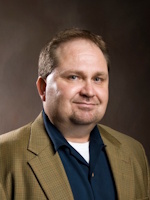
Advanced CBT: Overcoming Resistance and Treating Complex Cases is Module Three of the 3-course Cognitive Behavioral Therapy Training Certificate (CBTTC). For more information on the CBTTC and discounted enrollment in the full program, please visit this page. Clinicians familiar with standard CBT can still feel stuck when clients present with co-occurring conditions, longstanding problems, rigid thinking, intense emotions, impulsive behavior, limited insight, or recurring therapy-interfering patterns. These cases can make it difficult to know where to begin, how to respond to resistance, or how to judge meaningful progress. Although CBT is sometimes reduced to coping skills or surface-level symptom management, cognitive approaches can also address deeper beliefs and more complex presentations. For behavioral health professionals, the challenge is not simply choosing another technique; it is adapting formulation, pacing, communication, expectations, and the use of the therapeutic relationship to the needs of the case. Jeff Riggenbach, PhD, trained at The Beck Institute for Cognitive Therapy and Research in Philadelphia specifically to help develop a personality disorder treatment program that has treated more than 500 patients with borderline personality disorder and many individuals with other personality disorders across two facilities over a 15-year period. His experience integrating cognitive, dialectical behavior, and schema-informed methods with complex clinical presentations—and training clinicians throughout the United States and internationally—directly informs the practical guidance and case examples in this course. Even clinicians with a strong foundation in CBT can feel uncertain when clients’ difficulties are longstanding, multifaceted, and slow to respond to standard interventions. Through didactic instruction, clinical examples, case analysis, and humor, Jeff presents an integrated CBT, dialectical behavior therapy, and schema-informed approach to help clinicians better understand what is maintaining the problem, work through resistance, and recognize meaningful progress. Although CBT is sometimes misunderstood as a brief, surface-level approach, cognitive and schema-informed methods can also address deeply rooted beliefs and complex clinical presentations. Effective work with these cases requires more than choosing another technique; it calls for thoughtful case conceptualization, flexible communication, realistic expectations, and purposeful use of the therapeutic relationship while maintaining structure, accountability, collaboration, and compassion. The approach remains practical and measured, recognizing that no single intervention fits every client and that progress may occur gradually. Enroll today to strengthen your ability to conceptualize complex cases, respond to resistance with greater clarity, and apply schema-informed CBT strategies to borderline personality disorder, paranoia, psychosis, and other challenging presentations. The course offers a practical framework for supporting realistic progress while helping clients build skills they can continue using beyond regular treatment. This is a non-interactive, self-study course that offers over 5 hours of recorded video instruction, a post-test and a course evaluation. From the time of registration, you have six months to access the coursework. This course is intended for clinicians who provide behavioral health services. This is a non-interactive, self-study course. Teaching methods for this course include recorded lectures, videos, a post-test, and a course evaluation. Course access and completion instructions. Jeff Riggenbach, PhD, is a best-selling and award-winning author/speaker/clinician who has trained audiences in all 50 United States, Canada, Mexico, The UK, Ireland, Malta, Australia, New Zealand, and South Africa. He has devoted the past 25 years to developing advanced expertise in cognition and personality. He personally trained at The Beck Institute of Cognitive Therapy and Research to develop his hospital's Borderline Personality Disorder Treatment Program, which has not treated over 500 patients with BPD across multiple levels of care. He has since developed and directed cognitive-behavioral based programs for Depression, Anxiety Disorders, and Addictive Behavior Disorders. Jeff's approach of taking evidence-based treatments and presenting them in ways that can be used by everyday clinicians "in the trenches" has earned him the nickname "The Practical Toolbox Guy," and his trainings often receive the highest marks from conference participants. The instructor(s) for this course receive compensation for their services. There are no reported conflicts of interest to disclose. This course consists of 5 continuing education hours of credit. Telehealth Certification Institute, LLC has been approved by NBCC as an Approved Continuing Education Provider, ACEP No, 6693. Programs that do not qualify for NBCC credit are clearly identified. Telehealth Certification Institute, LLC is solely responsible for all aspects of the programs. Telehealth Certification Institute, LLC is recognized by the New York State Education Department's State Board for Mental Health Practitioners as an approved provider of continuing education for Licensed Mental Health Counselors. #MHC-0048. Many MFT licensing boards accept our courses or one of the approvals which we have from professional associations. You can check with your board to determine if your licensing board would accept this course. Telehealth Certification Institute, LLC is recognized by the New York State Education Department's State Board for Mental Health Practitioners as an approved provider of continuing education for licensed marriage and family therapists #MFT-0135, effective May 8, 2025. Telehealth Certification Institute LLC, #1609, is approved as an ACE provider to offer social work continuing education by the Association of Social Work Boards (ASWB) Approved Continuing Education (ACE) program. Regulatory boards are the final authority on courses accepted for continuing education credit. ACE provider approval period: 05/02/2024 – 05/02/2027. Social workers completing this course receive 5 clinical continuing education credits. Telehealth Certification Institute, LLC is recognized by the New York State Education Department's State Board for Social Work as an approved provider of continuing education for Licensed Social Workers #SW-0435. This course has been approved by Telehealth Certification Institute LLC, as a NAADAC Approved Education Provider, for educational credits. NAADAC Provider #193104, Telehealth Certification Institute LLC is responsible for all aspects of the programming. Telehealth Certification Institute LLC is approved by the American Psychological Association to sponsor continuing education for psychologists. Telehealth Certification Institute LLC maintains responsibility for this program and its content. Telehealth Certification Institute, LLC is recognized by the New York State Education Department’s State Board for Psychology as an approved provider of continuing education for Licensed Psychologists #PSY-0128. Telehealth Certification Institute, LLC is recognized by the New York State Education Department's State Board for Mental Health Practitioners as an approved provider of continuing education for Licensed Creative Arts Therapists #CAT-0093. This course qualifies for 300 minutes of instructional content as required by many national, state and local licensing boards and professional organizations. Retain your certificate of completion and contact your board or organization for specific filing requirements. This is a non-interactive, self-study course. Close Captioning is available for live webinars and recorded video presentations. You can click on the following links to view our policies:Description
Key Takeaways
Why This Course?
Learning Objectives
Format and Access
Course Details
Availability:
Who Should Attend:
Teaching Methods:
How to Attend:
Instructor and Disclosures
Instructor
About Jeff Riggenbach, Ph.D.
Disclosure Statement:
CE Hours
Credit Hours:
Counselors:
Marriage and Family Therapists:
Social Workers:

Addiction Professionals:
Psychologists:
Art Therapists:
Other Professionals:
Accommodations and Policies
This course was recorded 7/24/26
Related products



Testimonials
Iveyana Kiara Smith
Jessy Hainbach
Bryant Wilson
Ben Keyser
Mei Chan
Meghan Co, LCSW-C, LICSW