Telemental Health Practice and Implications of the Law Across State Lines

Payment Options: Credit Card, PayPal, Venmo, or Pay Later (4 payments)
Rewards: You earn 10% on all of your orders towards your next purchase.
The add to cart button will appear once you select the values above
Specifications
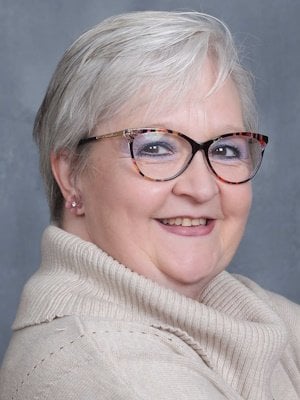
When state lines become ethical fault lines, behavioral health professionals can’t afford to guess. This course demystifies the legal risks of cross-jurisdictional telemental health and gives you the tools to practice with clarity, confidence, and compliance. From licensure compacts to conflicting state laws, clinicians are increasingly caught in a maze of legal obligations when delivering care remotely. This course invites you to protect your license—and your clients—by equipping yourself with legal knowledge that translates directly into everyday clinical decisions. Dr. Ann Ordway, JD, PhD., brings decades of experience at the intersection of law and counseling. A retired family law attorney and counselor educator, she has worked with high-conflict families, served as a parenting coordinator, and trained mental health professionals across the globe. Her extensive courtroom experience and leadership roles in counselor education uniquely qualify her to help clinicians navigate the high-stakes legal landscape of telemental health. Dr. Ordway’s approach is direct and grounded in real-world application. With a clear-eyed review of law, ethics, and case dynamics, she breaks down complex legal constructs into practical knowledge that clinicians can immediately apply—whether they're seeing clients across state lines or preparing to respond to subpoenas or board complaints. This course explores how jurisdictional authority, HIPAA compliance, and state-specific regulations intersect with telehealth logistics. It examines the nuances of informed consent, differences in mandatory reporting laws, exceptions to confidentiality, and compacts like PSYPACT and the Counseling Compact. You’ll also explore how legal proceedings may involve you as a clinician—intentionally or not—and how to proactively protect your practice. Understand core legal concepts: Learn how jurisdiction, rule of law, and conflicts between state laws can impact your telemental health practice. Anticipate complex dilemmas: Gain insight into the challenges clinicians face when legal obligations differ between their state and their client’s state. Prepare for legal proceedings: Know when and how you might be involved in a case, and what steps to take to minimize legal risk. Timely and relevant training: Telemental health is here to stay, but the laws governing it are still evolving—this course helps you stay ahead. Expert-led content: Dr. Ordway’s unique blend of legal expertise and counseling experience ensures a balanced, informed perspective tailored for clinicians. Ethics and compliance-focused: Offered by Telehealth Certification Institute, whose mission is to empower clinicians with knowledge that promotes ethical, high-quality care. Discuss two legal concepts that apply to providing telemental health services when the therapist is located in a different state than the client. Assess a dilemma involving inconsistent professional legal obligations in the jurisdiction where the therapist is located and the jurisdiction where the client is located. Explain the circumstances under which a therapist providing telemental health services may be involved in a legal proceeding involving a client. Whether you're already practicing across state lines or planning to do so under an interstate compact, this course offers clarity in a field full of gray areas. Join us to gain essential knowledge that helps you serve clients confidently and safeguard your professional integrity. Enroll now to begin learning instantly. This is a non-interactive, self-study course. Instruction consists of 3 hours of video instruction and a post-test. From the time of registration, you have six months to access the coursework. This course is intended for clinicians who provide behavioral health services. This is a non-interactive, self-study course. Teaching methods for this course include recorded lectures, videos, a post-test, and a course evaluation. Course access and completion instructions. Ann Ordway has a law degree and a PhD in Counselor Education and Supervision. She is a retired family law attorney following approximately 20+ years of private practice in New Jersey, where she primarily worked with high conflict divorce dynamics, parenting coordination, and child advocacy. She received her MA and EdS in Counseling from Seton Hall University and completed her Practicum and Internship at the Counseling Services program on campus. Ann has been trained as a family mediator, a Guardian Ad Litem, and as a Parenting Coordinator. Clinical experience has included work with high-conflict families, victims of domestic violence, anger management with accused offenders of domestic violence, and school counseling. Ann has taught graduate-level clinical mental health and school counseling for nearly 14 years, both in-person and via distance learning. She was the College Academic Director of Counseling at a University in Phoenix, Arizona, and she is a former president of the Arizona Counseling Association. She is currently the program director at the Association of Family and Conciliation Courts, where she facilitates the delivery of trainings for an international, interdisciplinary audience of family law professionals. Dr. Ordway’s doctoral dissertation on the experiences of parenting coordinators working with high-conflict couples engaged in intimate partner violence dynamics is the foundation of her current research. She is a national and international presenter, and has published in peer-reviewed journals on topics related to high-conflict families, the impact of divorce on children, ethics, and the preparedness of counselors for court-involved roles and general court involvement. The instructor(s) for this course receive compensation for their services. There are no reported conflicts of interest to disclose. This course consists of 3 continuing education hours of credit. Telehealth Certification Institute, LLC has been approved by NBCC as an Approved Continuing Education Provider, ACEP No, 6693. Programs that do not qualify for NBCC credit are clearly identified. Telehealth Certification Institute, LLC is solely responsible for all aspects of the programs. Telehealth Certification Institute, LLC is recognized by the New York State Education Department's State Board for Mental Health Practitioners as an approved provider of continuing education for Licensed Mental Health Counselors. #MHC-0048. Many MFT licensing boards accept our courses or one of the approvals which we have from professional associations. You can check with your board to determine if your licensing board would accept this course. Telehealth Certification Institute, LLC is recognized by the New York State Education Department's State Board for Mental Health Practitioners as an approved provider of continuing education for licensed marriage and family therapists #MFT-0135, effective May 8, 2025. Telehealth Certification Institute LLC, #1609, is approved as an ACE provider to offer social work continuing education by the Association of Social Work Boards (ASWB) Approved Continuing Education (ACE) program. Regulatory boards are the final authority on courses accepted for continuing education credit. ACE provider approval period: 05/02/2024 – 05/02/2027. Social workers completing this course receive 3 clinical continuing education credits. Telehealth Certification Institute, LLC is recognized by the New York State Education Department's State Board for Social Work as an approved provider of continuing education for Licensed Social Workers #SW-0435. This course has been approved by Telehealth Certification Institute LLC, as a NAADAC Approved Education Provider, for educational credits, effective 1/16/2025. NAADAC Provider #193104, Telehealth Certification Institute LLC is responsible for all aspects of the programming. Telehealth Certification Institute, LLC is recognized by the New York State Education Department’s State Board for Psychology as an approved provider of continuing education for Licensed Psychologists #PSY-0128. Telehealth Certification Institute, LLC is recognized by the New York State Education Department's State Board for Mental Health Practitioners as an approved provider of continuing education for Licensed Creative Arts Therapists #CAT-0093. This course qualifies for 180 minutes of instructional content as required by many national, state and local licensing boards and professional organizations. Retain your certificate of completion and contact your board or organization for specific filing requirements. This is a non-interactive, self-study course. Close Captioning is available for live webinars and recorded video presentations. You can click on the following links to view our policies:Description

Key Takeaways:
Why this course?
Learning Objectives:
Format and Access
Course Details
Availability:
Who Should Attend:
Teaching Methods:
How to Attend:
Instructor and Disclosures
About Ann Ordway, JD, PhD
Disclosure Statement:
CE Hours
Credit Hours:
Counselors:
Marriage and Family Therapists:
Social Workers:

Addiction Professionals:
Psychologists:
Art Therapists:
Other Professionals:
Accommodations and Policies
This course was recorded 10/31/24
Related products


Testimonials
Iveyana Kiara Smith
Jessy Hainbach
Bryant Wilson
Ben Keyser
Mei Chan
Meghan Co, LCSW-C, LICSW