Cultural Broaching in Counseling: Deepening Dialogue, Trust, and Healing Across Differences
Enroll in the Online Self-Study and complete the training on your own schedule.
1.5 CE hours available for behavioral health clinicians completing the Online Self-Study
Culture is present in every counseling relationship, whether it is named or left unspoken. Clients bring lived experiences shaped by race, ethnicity, gender, sexuality, family traditions, religion, immigration history, social class, community norms, disability, power, and other intersecting identities. When clinicians avoid these dimensions out of fear of saying the wrong thing, making the session uncomfortable, or “making it about race,” clients may wonder whether important parts of themselves are truly welcome in the room.
For behavioral health professionals, cultural broaching is not a one-time diversity question or a generic multicultural checklist. It is an intentional, ongoing, and relational practice of inviting culture, identity, power, and lived experience into the therapeutic conversation with humility, curiosity, and respect for the client’s pace. This training helps clinicians recognize why broaching matters, what can get in the way, and how to approach these conversations in ways that strengthen trust rather than disrupt it.
Register for the 1.5 CE Online Self-Study for $45
Payment Options are listed at checkout
Register for the 0 CE Training Video for $23
Payment Options are listed at checkout
You will learn from Dr. Taqueena S. Quintana and Dr. David Julius Ford, Jr. Both instructors are alumni of the NBCC Minority Fellowship Program, which reflects specialized preparation in serving historically excluded communities. Dr. Quintana brings more than 15 years of clinical experience across military, hospital, and educational settings, with a focus on anti-racist counseling. Dr. Ford is a department chair and co-chair of the ACES DEIJ Task Force, and his work includes scholarship on intersectionality and queer and trans BIPOC populations. Their combined clinical, teaching, research, and advocacy experience directly supports this course’s focus on culturally responsive counseling practice.
Rather than presenting cultural broaching as a rigid script, Drs. Quintana and Ford emphasize flexibility, self-awareness, and clinical judgment. The course explores cultural broaching as a proactive process that begins with the counselor’s own reflection: What am I noticing? What am I avoiding? What assumptions or fears might I be bringing into the room? From there, clinicians consider how to name cultural dynamics respectfully, invite exploration without pressure, validate clients’ experiences, and continue revisiting culture as it becomes relevant across treatment.
The training also addresses common barriers that make broaching feel difficult, including fear of offending clients, discomfort discussing race or culture, lack of confidence or language, assumptions about neutrality, and uncertainty about how to respond when a client does not want to engage the topic. Drs. Quintana and Ford present broaching as a developmental process, helping clinicians assess their own growth without shame while learning how to integrate cultural broaching into intake, assessment, treatment planning, rupture and repair, termination, and ongoing therapeutic dialogue. Through case examples, practice language, and clinical discussion, the course highlights how clinicians can honor client boundaries, center the client’s worldview, and better distinguish culturally specific behavior, contextual stress, trauma-related concerns, and clinical symptoms across individual, couple, family, and child counseling contexts.
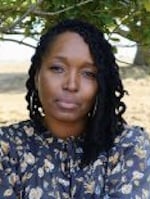
Instructor
Taqueena S. Quintana, Ed.D, LCPC, LPC, LPCC, NCC, ACS, BC-TMH
Dr. Taqueena Quintana is a licensed clinical professional counselor, nationally certified counselor (NCC), approved clinical supervisor (ACS), board-certified telemental health counselor (BC-TMH), registered yoga teacher (RYT-200), counselor educator, author, and consultant. She has over 15 years’ experience in education and counseling within various settings including K-12 institutions, colleges/universities, private practice, military installations, hospitals, and community mental health agencies.
Dr. Quintana is dedicated to supporting and preparing the next generation of professional counselors to serve historically excluded groups and communities. She has presented nationally and internationally at various counseling conferences and has published peer-reviewed articles that focus on culturally responsive practices in counseling. Her research interests include counseling military-connected youth, immigrant mental health, clinical supervision, school-based mental health, supporting students with disabilities, anti-racist counseling, and telemental health.
Dr. Quintana was awarded for her work in advocating for underserved, underrepresented, and marginalized communities by the National Board of Certified Counselors Minority Fellowship Program. Through NBCC, she currently volunteers as a mentor for emerging professional counselors who serve similar populations.
She holds a BA in History with a Minor in Puerto Rican, Africana, and Latin American Studies from CUNY Hunter College, an M.S.Ed. in Teaching Students with Disabilities and an M.S.Ed. in School Counseling, both from CUNY Brooklyn College, and an EdD in Counselor Education & Supervision from Argosy University- Northern Virginia.
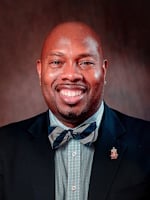
Instructor
David Ford, Jr., Ph.D., LCMHC, LPC, NCC, ACS
David Julius Ford, Jr., holds a B.A. in Psychology and an M.A. in Clinical Mental Health Counseling, both from Wake Forest University. In May 2014, he earned his Ph.D. in Counselor Education and Supervision at Old Dominion University. Dr. Ford is a Licensed Clinical Mental Health Counselor (LCMHC) in North Carolina and a Licensed Professional Counselor (LPC) in Virginia and New Jersey. He is a Board-Certified Counselor (NCC) and Approved Clinical Supervisor (ACS). Dr. Ford taught for four years at James Madison University and is now a Tenured Associate Professor and Department Chair in the Department of Professional Counseling at Monmouth University, where he is in his seventh-year teaching. He is Past-President of the New Jersey Counseling Association. He is Past Co-Chair of the Branch Development Committee of the American Counseling Association, a member of the Black Male Experience Task Force of the American Counseling Association, Past Board Trustee for Counselor Education and Research for the National Career Development Association, a division of the American Counseling Association. He is the North Atlantic Region Representative to the ACA Governing Council and serves on the Editorial Board of the Journal of Counselor Education and Supervision and the Journal of Multicultural Counseling and Development. Dr. Ford sits on the Board of Trustees of the Brookdale Community College Foundation and on the Inspiring Life Board of Directors. He was recently appointed to be Co-Chair of the ACA DEIJ Task Force.
Dr. Ford’s professional interests are Black Greek life; multicultural issues; college students; Black men in higher education; career counseling; addictions counseling; supervision; group work; qualitative research; queer and trans BIPOC; Intersectionality; and persons living with HIV/AIDS. He has experience as an instructor for undergraduate human services courses and has taught graduate courses in counseling skills, multicultural counseling, career counseling, testing and assessment, clinical mental health counseling, addictions counseling, practicum supervision, lifespan development, and group counseling. He has also taught a doctoral-level dissertation course and a doctoral-level course in grant-writing and program evaluation and advanced theories. He is one of 24 inaugural doctoral fellows of the NBCC Minority Fellowship Program. He is the 2020 recipient of the AMCD Samuel H. Johnson Distinguished Service Award and the 2020 ACES Outstanding Counselor Education and Supervision Article Award. Dr. Ford is a classically trained pianist and is a proud, active, and financial member of Kappa Alpha Psi Fraternity, Inc. As an undergraduate, he had the privilege of taking a class taught by the late Dr. Maya Angelou. Dr. Ford currently lives in Ocean, New Jersey.
Key Takeaways
- Cultural broaching is a core clinical skill: Explore why culture, identity, power, and lived experience are always part of counseling, even when they are not explicitly named.
- Self-awareness comes before intervention: Learn how clinicians’ own identities, assumptions, discomfort, and positionality shape their ability to broach culture with humility and authenticity.
- Broaching is ongoing and permission-based: Understand how to introduce, revisit, and sustain cultural conversations without pressuring clients or making the clinician the cultural authority.
- Avoidance has clinical consequences: Examine how unbroached cultural dynamics can contribute to mistrust, missed meaning, empathic failure, overpathologizing, or client disengagement.
- Practical strategies apply across settings: Consider ways to integrate cultural broaching into individual, couple, family, child, supervision, and educational contexts while adapting to the client’s developmental level, goals, and readiness.
Why This Course?
- Move beyond silence and uncertainty: Many clinicians want to provide culturally responsive care but feel unsure how to begin. This course offers language, examples, and clinical framing to help make broaching more intentional and less avoidant.
- Strengthen the therapeutic alliance: When done with humility and care, cultural broaching can help clients feel seen, heard, respected, and safer bringing their full selves into therapy.
- Improve case conceptualization: Broaching helps clinicians avoid viewing clients’ concerns in a cultural vacuum and supports more accurate understanding of stress, coping, family dynamics, identity, trauma, and resilience.
- Support ethical and culturally responsive practice: The training connects broaching to the broader professional responsibility to address culture, power, and client context as part of competent behavioral health care.
- Use examples that translate to practice: Case material, sample questions, and discussion of individual, couple, family, and child counseling contexts make the course clinically useful rather than merely conceptual.
Learning Objectives
- Explain the role of cultural broaching in counseling and its impact on therapeutic trust, client outcomes, and counselor-client dynamics.
- Identify common barriers counselors face when initiating cultural conversations in therapy.
- Formulate strategies for integrating cultural broaching techniques into individual, couple, and family counseling sessions.
Cultural broaching requires courage, humility, and practice. This training offers behavioral health professionals a practical foundation for opening and sustaining conversations about culture, identity, power, and lived experience in ways that are respectful, collaborative, and clinically meaningful. Register today to strengthen your ability to create counseling relationships where clients’ full selves are invited, honored, and understood.
Select each tab for course details
Availability:
From the time of registration, you have six months to access the coursework.
Who Should Attend:
This course is intended for clinicians who provide behavioral health services.
Teaching Methods:
This is a non-interactive, self-study course. Teaching methods for this course include recorded lectures, videos, a post-test, and a course evaluation.
How to attend:
Directions for completing a course can be found by clicking here.
This program was recorded on February 6, 2026.
Testimonials
Iveyana Kiara Smith
Jessy Hainbach
Bryant Wilson
Ben Keyser
Mei Chan
Meghan Co, LCSW-C, LICSW