E-Therapy and Telehealth: Ethics, Application, and Clinical Practice
Enroll in the Online Self-Study course and complete it at your own pace.
1 CE hours available for behavioral health clinicians upon completion.
Telehealth has revolutionized behavioral healthcare—but with innovation comes new ethical dilemmas, evolving expectations, and a flood of technology-based tools that demand confident, informed clinical judgment. This course offers a clear path forward, empowering clinicians to navigate ethical challenges and technology integration with clarity, competence, and purpose.
In a time of rapid digital transformation, understanding the rules—and the risks—of e-therapy is no longer optional. This course equips you with the insights and practical guidance needed to serve clients effectively, safely, and ethically in our ever-connected world.
Enroll in the 1 CE Online Self-Study for $20
Payment Options are listed at checkout
Register for the 0 CE Training Video for $10
Payment Options are listed at checkout
James R. Corbin, MSW, LCSW, brings more than 25 years of clinical and academic leadership to this course, with deep expertise in mental health ethics, telehealth delivery, and family therapy. His dynamic career spans service to children, adolescents, and military families, as well as teaching at Temple University and Elizabethtown College. Prof. Corbin’s extensive work on the intersection of technology, neuroscience, and ethics makes him uniquely positioned to teach this critical content.
Drawing from real-world cases, professional codes of ethics, and current research, Prof. Corbin presents a balanced and practical approach to clinical practice in digital spaces. Participants will gain both a theoretical framework and actionable strategies to uphold ethical standards while leveraging technology to support client care.
This course explores the ethical implications of e-therapy and telehealth, the use of mobile mental health applications, client confidentiality and consent, secure technology platforms, HIPAA compliance, and the risks and benefits of providing services across state lines. Participants will also review best practices in evaluating mental health apps, the growing role of asynchronous and synchronous platforms, and how technology is transforming client engagement and supervision.
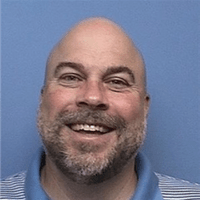
Instructor
James R. Corbin, MSW, LCSW,
James R. Corbin received his Bachelor of Arts Degree in Political Science from the Pennsylvania State University and his Masters Degree in Social Work from Temple University. He is a doctoral candidate from the Clinical Social Work Institute in Washington, DC. He is a Licensed Clinical Social Worker in Pennsylvania with a specialty in childhood mental illness and individual and family therapy with children, adolescents, adults, and their families. He has worked for over 25 years in the mental health field including eight years at Hoffman Homes for Youth in Gettysburg, Pennsylvania and had most recently served as their Assistant Director of Clinical Services. He was appointed in the spring of 2002 as Adjunct Faculty Member and fall 2002 through spring 2008 as Visiting Instructor/Lecturer of Social Work at McDaniel College (formerly Western Maryland College) and served as their BSW Program Director. From 2008-2018, he has served as full-time clinical faculty and instructor in the graduate school of social work at Temple University and was former Assistant MSW Program Director and Clinical Director of the Military Family Center at Temple – a counseling center for military service members, veterans, and their families.
You can find James by clicking and
Key Takeaways:
- Clarify ethical responsibilities: Understand professional guidelines for practicing across digital platforms and with emerging technologies.
- Know your tech limits: Learn where technology enhances care—and where it might compromise confidentiality, clinical quality, or legal compliance.
- Expand your clinical toolkit: Discover alternative methods for service delivery in a tech-integrated practice landscape.
Why this course?
- Expert-led instruction: Learn from an accomplished clinician-educator with deep expertise in ethics, clinical supervision, and technology in practice.
- Real-world application: Gain tools and strategies that immediately apply to your day-to-day work in telehealth and e-therapy settings.
- Trusted provider: Telehealth Certification Institute is committed to excellence, innovation, and empowering clinicians with relevant, high-quality training.
Learning Objectives:
- Identify ethical guidelines for e-therapy and related practices such as tele-medicine.
- Demonstrate knowledge of the utility and limits to practice employing technology.
- List alternative clinical practices and options in the Age of Connection.
Whether you're expanding your telehealth services, reassessing your ethical practices, or simply striving to provide better care in the digital age, this course will guide you toward confident, compliant, and compassionate practice. Add this essential training to your professional development today.
Add this course to your cart to begin learning instantly.
This is a non-interactive, self-study course. Instruction consists of 1 hour of video instruction and a post-test.
Select each tab for course details
Availability:
From the time of registration, you have six months to access the coursework.
Who Should Attend:
This course is intended for clinicians who provide behavioral health services.
Teaching Methods:
This is a non-interactive, self-study course. Teaching methods for this course include recorded lectures, videos, a post-test, and a course evaluation.
How to attend:
Directions for completing a course can be found by clicking here.
This program was recorded on March 23, 2022.
Testimonials
Iveyana Kiara Smith
Jessy Hainbach
Bryant Wilson
Ben Keyser
Mei Chan
Meghan Co, LCSW-C, LICSW