Differential Diagnosis in the DSM Framework: Depressive Disorders

*
Payment Options: Credit Card, PayPal, Venmo, or Pay Later (4 payments)
Rewards: You earn 10% on all of your orders towards your next purchase.
The add to cart button will appear once you select the values above
Specifications
This course is a live, interactive webinar held on December 18, 2026, from 12pm-1pm Eastern Standard Time. Registration closes at midnight (EST) the day before the event Depressive symptoms can appear similar across diagnoses, yet subtle differences in duration, course, context, and causation can substantially affect case formulation and treatment planning. A structured approach to differential diagnosis helps clinicians move beyond the broad label of “depression” and identify the diagnosis that most accurately reflects the client’s presentation. This focused training provides an opportunity to revisit the foundations of DSM-based diagnostic reasoning while strengthening the practical judgment required to distinguish among depressive disorders and related conditions. By applying a careful, replicable process, clinicians can approach complex presentations with greater clarity and develop treatment plans grounded in a more complete understanding of the client’s symptoms and history. Jason Buckles, Ph.D., LPCC, brings more than two decades of experience in clinical practice, graduate-level teaching, behavioral consultation, and statewide systems development. He has taught DSM assessment to counseling students, provided statewide training on co-occurring mental health conditions, and served as an expert consultant to the New Mexico Department of Health, giving him extensive experience translating diagnostic principles into clinically useful decision-making. Dr. Buckles uses a straightforward, lecture-based approach grounded in current literature, practice-based examples, focused assessment questions, and brief case material. Rather than presenting diagnosis as a process of simply matching symptoms to a checklist, he demonstrates how clinicians can use DSM-5-TR logic, longitudinal information, exclusion criteria, and contextual variables to arrive at a defensible best-fit diagnosis. The course examines the challenges involved in differentiating major depressive disorder, persistent depressive disorder, persistent depressive disorder with major depressive episodes, and substance/medication-induced depressive disorder. Participants will review symptom thresholds, duration requirements, longitudinal course, and the temporal relationship between symptoms and substance or medication exposure. The training also addresses the importance of considering bipolar disorder, psychotic disorders, medical conditions, grief, adjustment disorder, and substance-related causes; provides example assessment questions; and concludes with brief case examples and a practical diagnostic algorithm. Particular attention is given to common errors, including treating depression as a single diagnosis, relying too heavily on cross-sectional symptoms, overlooking changes over time, and assuming that co-occurring substance use establishes causation. Regardless of theoretical orientation, clinicians benefit from a reliable method for determining which diagnosis best accounts for a client’s depressive symptoms and overall clinical picture. This training offers a practical opportunity to return to the fundamentals, refine differential-diagnosis skills, and approach future assessments with greater clarity and confidence. This course is a live, interactive webinar. Schedule: (listed in Eastern Daylight Time) Course access and completion instructions. This course is intended for clinicians who provide behavioral health services. This is a live, interactive webinar. Enrollment includes access to live event(s) but does not include recordings of the presentations. Originally from Cleveland, Ohio, Jason earned his Bachelor’s in Psychology at New York University in 1996. While there, he worked on diagnostic projects at Bellevue Hospital and the New York State Psychiatric Institute. He earned his Master’s in Counseling at The University of New Mexico in 2001 and his Ph.D. in Special Education at The University of New Mexico in 2016. His dissertation focused on the experiences of direct support professionals who support people with sexually challenging behavior. Since 2002 Jason has been the owner of Talkabout Inc., a Behavior Consultation agency specializing in support for people with intellectual disability and concurrent mental health diagnoses. From 2012 through 2016, Jason was the Statewide Clinical Director of the New Mexico Department of Health – Bureau of Behavioral Support, overseeing statewide systems of behavioral support consultation. From 2016-2019 Jason was the Executive Director of A Better Way of Living, a CQL-accredited agency that provides life-wide supports for people with intellectual disability. He is currently a contracting consultant with the New Mexico Department of Health, where he supervises the sexual risk screening program, and the ongoing development of behavior support systems, and provides statewide trainings on co-occurring mental health conditions for people with intellectual disability, among other topics. For several years Jason has also served as the Program Manager for the Developmental Disability/Mental Illness project with the University of New Mexico. For most of the past 20 years, he was a part-time instructor at both The University of New Mexico, teaching Introduction to Intellectual Disability, and at New Mexico Highlands University, teaching DSM Assessment for Counselors. The instructor(s) for this course receive compensation for their services. There are no reported conflicts of interest to disclose. This course consists of 1 continuing education hour of credit. Telehealth Certification Institute, LLC has been approved by NBCC as an Approved Continuing Education Provider, ACEP No, 6693. Programs that do not qualify for NBCC credit are clearly identified. Telehealth Certification Institute, LLC is solely responsible for all aspects of the programs. Telehealth Certification Institute, LLC is recognized by the New York State Education Department's State Board for Mental Health Practitioners as an approved provider of continuing education for Licensed Mental Health Counselors. #MHC-0048. Many MFT licensing boards accept our courses or one of the approvals which we have from professional associations. You can check with your board to determine if your licensing board would accept this course. Telehealth Certification Institute LLC, #1609, is approved as an ACE provider to offer social work continuing education by the Association of Social Work Boards (ASWB) Approved Continuing Education (ACE) program. Regulatory boards are the final authority on courses accepted for continuing education credit. ACE provider approval period: 05/02/2024 – 05/02/2027. Social workers completing this course receive 1 clinical continuing education credit. Telehealth Certification Institute, LLC is recognized by the New York State Education Department's State Board for Social Work as an approved provider of continuing education for Licensed Social Workers #SW-0435. This course has been approved by Telehealth Certification Institute LLC, as a NAADAC Approved Education Provider, for educational credits. NAADAC Provider #193104, Telehealth Certification Institute LLC is responsible for all aspects of the programming. Telehealth Certification Institute LLC is approved by the American Psychological Association to sponsor continuing education for psychologists. Telehealth Certification Institute LLC maintains responsibility for this program and its content. Telehealth Certification Institute, LLC is recognized by the New York State Education Department’s State Board for Psychology as an approved provider of continuing education for Licensed Psychologists #PSY-0128. Telehealth Certification Institute, LLC is recognized by the New York State Education Department's State Board for Mental Health Practitioners as an approved provider of continuing education for Licensed Creative Arts Therapists #CAT-0093. This course qualifies for 60 minutes of instructional content as required by many national, state and local licensing boards and professional organizations. Retain your certificate of completion and contact your board or organization for specific filing requirements. This course is an-interactive, live online webinar. Participants may request a printed version of their certificate of completion to be delivered by mail. A shipping/handling fee of $6.95 will be charged per request. Shipping internationally may require an additional charge. By registering for this event you are agreeing to the following: Close Captioning is available for live webinars and recorded video presentations. You can click on the following links to view our policies:Description
Key Takeaways:
Why This Course?
Learning Objectives
Format and Access
Course Details
How to Attend:
Who Should Attend:
Teaching Methods:
Instructor and Disclosures
Instructor
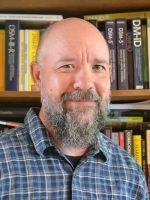
About Jason Buckles, Ph.D., LPCC
Disclosure Statement:
CE Hours
Credit Hours:
Counselors:
Marriage and Family Therapists:
Social Workers:

Addiction Professionals:

Psychologists:
Art Therapists:
Other Professionals:
Agreement
Accommodations and Policies
Related products


Testimonials
Iveyana Kiara Smith
Jessy Hainbach
Bryant Wilson
Ben Keyser
Mei Chan
Meghan Co, LCSW-C, LICSW