Differential Diagnosis in the DSM Framework: Principles and Clinical Application

*
Payment Options: Credit Card, PayPal, Venmo, or Pay Later (4 payments)
Rewards: You earn 10% on all of your orders towards your next purchase.
The add to cart button will appear once you select the values above
Specifications
This course is a live, interactive webinar held on November 6, 2026, from 12pm-1pm Eastern Standard Time. This reduced price webinar does not offer CE Credits. The same live event is available for purchase and offers 1 CE hour for behavioral health clinicians. See "related products" below. Registration closes at midnight (EDT) the day before the event The process of determining a best-fit DSM diagnosis is a necessary skill for nearly all mental health professionals, yet many practitioners have not received dedicated training in differential diagnosis since graduate school. Given the significant overlap in symptomatology between many diagnoses described in the DSM, a careful and considered approach that accounts for medical, substance-related, and other biopsychosocial variables is essential to sound case formulation and targeted treatment planning. This one-hour online training invites you to step back and revisit the fundamentals of diagnostic reasoning - to shore up what you already know while gaining new insights and practical tips that may help you expand your knowledge base in this area. No matter your theoretical approach to supportive mental health work, a consistent and replicable process can ease what often feels like a daunting task. Jason Buckles, Ph.D., LPCC, has been a practicing mental health counselor for over 25 years and brings more than two decades of experience teaching DSM-based assessment and treatment planning at the graduate level, including as an instructor of DSM Assessment for Counselors at New Mexico Highlands University. He has served as Statewide Clinical Director of the New Mexico Department of Health's Bureau of Behavioral Support and continues as an expert contracting consultant to the State of New Mexico, where he supervises the sexual risk screening program, supports the ongoing development of behavior support systems, and delivers statewide trainings on co-occurring mental health conditions. He has also authored and taught several online courses for the Telehealth Certification Institute and other providers of continuing education for mental health professionals, giving him a practiced sense of how to translate complex diagnostic material for working clinicians. Dr. Buckles uses a straightforward, lecture-based approach that is grounded in current literature and practice-based examples, which helps to make a complex matter easy to digest. Rather than framing diagnosis as a race to a label, he presents it as a longitudinal process aimed at diagnostic accuracy, walking participants through a systematic method they can carry directly into their next intake. His hope is that participants leave with new tools for the clinical toolbox and ideas to ponder or inspire conversation with colleagues. The course begins with a general exploration of the definition of differential diagnosis as a process aimed at diagnostic accuracy rather than diagnostic speed. After a brief discussion of the general purpose of the DSM and advances in the reliability of psychiatric diagnosis, the training examines general diagnostic processes, a model of diagnostic hierarchy, concerns about symptom overlap, and the importance of taking a careful history and gathering collateral information to assess course of illness. Attention is given to common sources of diagnostic error, including the pull toward theory confirmation, and to the integration of biological, psychological, and sociocultural factors into diagnostic formulation. Throughout, the importance of ethical decision making grounded in a consideration of cultural differences that may influence the process is stressed. While the DSM can seem daunting at times, a careful and replicable approach can help to ease the process and get down to work. We invite you to take some time to go back to the basics with an instructor who has spent his career making this material clear, and to leave with a diagnostic process you can trust. This course is a live, interactive webinar. Schedule: (listed in Eastern Daylight Time) Course access and completion instructions. This course is intended for clinicians who provide behavioral health services. This is a live, interactive webinar. Enrollment includes access to live event(s) but does not include recordings of the presentations. Originally from Cleveland, Ohio, Jason earned his Bachelor’s in Psychology at New York University in 1996. While there, he worked on diagnostic projects at Bellevue Hospital and the New York State Psychiatric Institute. He earned his Master’s in Counseling at The University of New Mexico in 2001 and his Ph.D. in Special Education at The University of New Mexico in 2016. His dissertation focused on the experiences of direct support professionals who support people with sexually challenging behavior. Since 2002 Jason has been the owner of Talkabout Inc., a Behavior Consultation agency specializing in support for people with intellectual disability and concurrent mental health diagnoses. From 2012 through 2016, Jason was the Statewide Clinical Director of the New Mexico Department of Health – Bureau of Behavioral Support, overseeing statewide systems of behavioral support consultation. From 2016-2019 Jason was the Executive Director of A Better Way of Living, a CQL-accredited agency that provides life-wide supports for people with intellectual disability. He is currently a contracting consultant with the New Mexico Department of Health, where he supervises the sexual risk screening program, and the ongoing development of behavior support systems, and provides statewide trainings on co-occurring mental health conditions for people with intellectual disability, among other topics. For several years Jason has also served as the Program Manager for the Developmental Disability/Mental Illness project with the University of New Mexico. For most of the past 20 years, he was a part-time instructor at both The University of New Mexico, teaching Introduction to Intellectual Disability, and at New Mexico Highlands University, teaching DSM Assessment for Counselors. The instructor(s) for this course receive compensation for their services. There are no reported conflicts of interest to disclose. This reduced price webinar does not offer CE credits, just great content. The same live event is available for purchase and offers 1 CE hour for behavioral health clinicians. See "related products" below. Participants may request a printed version of their certificate of attendance to be delivered by mail. A shipping/handling fee of $6.95 will be charged per request. Shipping internationally may require an additional charge. By registering for this event you are agreeing to the following: Close Captioning is available for live webinars and recorded video presentations. You can click on the following links to view our policies:Description
Key Takeaways:
Why This Course?
Learning Objectives
Format and Access
Course Details
How to Attend:
Who Should Attend:
Teaching Methods:
Instructor and Disclosures
Instructor
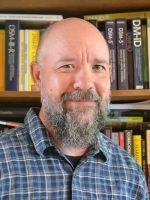
About Jason Buckles, Ph.D., LPCC
Disclosure Statement:
CE Hours
Agreement
Accommodations and Policies
Testimonials
Iveyana Kiara Smith
Jessy Hainbach
Bryant Wilson
Ben Keyser
Mei Chan
Meghan Co, LCSW-C, LICSW