What can you expect from a consultation session?
Private consultation with Ray Barrett is an opportunity for you -or your group- to seek specific guidance on the topics you want to discuss telehealth services. You may have just finished training and haven’t begun to provide distance services or perhaps you have the foundation for your telepractice but need help evaluating your current systems. Regardless of where you fit on the spectrum as a telemental health provider, consultation is a unique opportunity for you to set the agenda and clear goals for what you want to take away from your session with Ray.
March 27, 2020, is the date that the Coronavirus Aid, Relief, and Economic Security Act (CARES Act) was passed. The CARES Act is a $2 trillion stimulus package and designates emergency funding for topics such as healthcare, state funding, and overall relief.
What immediate impact does the CARES Act have on healthcare during the period of the COVID-19 emergency?
On March 20, 2020, Ray had an opportunity to catch up with Suzanne Gavin, a Licensed Clinical Social Worker, a Nationally Certified Custody Evaluator, and a Nationally Certified Parenting Coordinator.
What caught Ray’s attention, and the attention of other clinicians is her honest breakdown of her transition (and the related anxieties) to what she referred to as a mandated telemental health practice.
Ray Barrett recently met with Mei Kwong, the Executive Director at CCHP, Center for Connected Health Policy to discuss recent regulation changes pertaining to the COVID-19 epidemic.

March 2020 marked the release of the 21st Century Cures Act: Interoperability, Information Blocking, and the ONC Health IT Certification Program Final Rule by the Department of Health and Human Services (HHS). This has been a five-year process and a promise for improvement and progress in the United States health care system.
In December 2016, the Office of the National Coordinator for Health IT (ONC’s) Cures Act was signed into law by Congress and has been under revision so that the newly issued Final Rule supports modern-day technology. The Cures Act is designed to accelerate medical product development, information innovation and advancements in access to patient information. A goal of the Cures Act is to establish the means by which the market takes the lead and drives development – to not wait on legislation and regulations in order to make improvements.
H.R. 6074 (“Coronavirus Preparedness and Response Supplemental Appropriations Act, 2020”) is an $8.3 billion COVID-19 funding package that was signed into law on March 6, 2020, to address issues that arise during the coronavirus public health emergency. H.R.6074 includes a provision to temporarily lift restrictions and implement the wider use of telehealth services by Medicare beneficiaries.

HIPAA-compliant video conferencing is when a HIPAA-covered entity meets all of the requirements of the HIPAA and HITECH laws when using video conferencing with clients. The totality of HIPAA compliance is too large of a topic for this one article but we will cover specifically the HIPAA considerations of using video conferencing technology with clients.
Clarity results in guidance, pride, and effective partnerships!
Mental health counseling is an honorable profession and vital to the health of society. Mental health providers offer a unique skill set to clients and healthcare teams. Since there are so many titles used for mental health professionals (LMHC, LPC, LPCC…) and similar types of mental health professionals (Counselors, Social Workers, Marriage and Family Therapists, Psychologists, Psychoanalysis, …), there is often confusion about the specifics of the profession. Because of this, the mental health counseling profession has been in need of an official and unified statement that defines its values, unique characteristics, and qualifications.

The Center for Disease Control and Prevention (CDC) has stated that the coronavirus, COVID-19, will likely become a pandemic. They state that anyone in close contact with others with COVID-19, including healthcare workers, is more likely to be exposed to the virus. The CDC recommends using telehealth to prevent patients who can be cared for at home from going to healthcare facilities. They also recommend encouraging sick healthcare providers to stay at home, and they have made available infection control procedures for healthcare providers.
When a patient goes to a healthcare facility they are likely to encounter other people who are ill and seeking treatment. The best solution to the coronavirus is to limit the opportunities for it to spread. Telehealth is a great option to treat those who do not NEED to come to a facility for treatment, but who can receive adequate care at home.
Ray Barrett interviewed Kelly Koch from Compliancy Group. In this informative conversation, Ray and Kelly delve into the steps required by healthcare providers to remain compliant with HIPAA law when working with third-party vendors. Kelly was able to help dispel much of the confusion surrounding this important topic and layout some clear “does and don’ts” when it comes to HIPAA and working with other organizations.
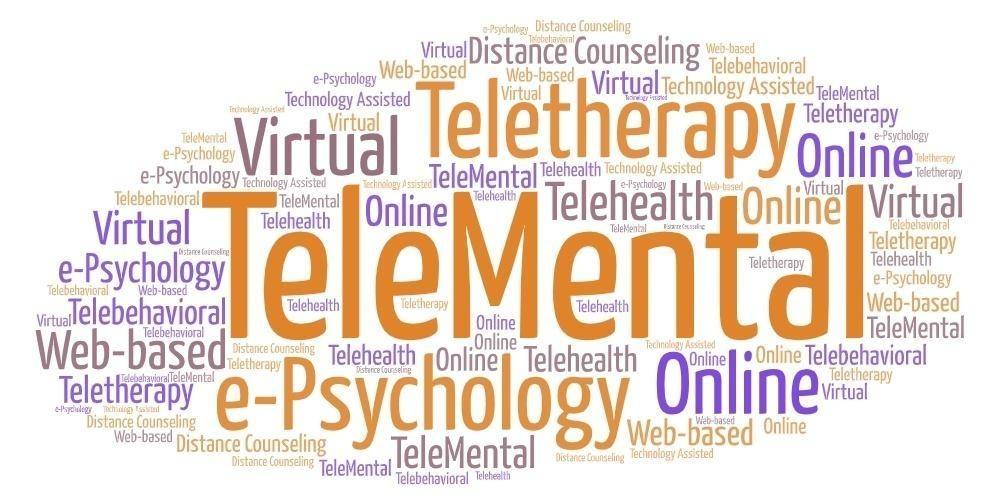
What do we call behavioral health sessions where the client and clinician are not in the same location but rely on technology to communicate?
There are so many terms and definitions for this that it often causes confusion. Knowing which term or definition to use is often determined by context. Among other terms used, social workers have used the term technology-assisted social work, psychologists have used the term e-psychology, and counselors have used the term distance counseling. Clinicians who specialize in using texting for therapy have referred to it as text therapy, and providers marketing to tech-savvy clients have used the terms web-based or cyber-counseling.

Telemental health is defined as the provision of behavioral or mental healthcare when the clinician and the client are in different locations at the time of services. Behavioral health services provided when the client and clinician are in the same location are often referred to as "face-to-face", "on-site", "in-person" or "in-office" sessions.
Testimonials
Iveyana Kiara Smith
Jessy Hainbach
Bryant Wilson
Ben Keyser
Mei Chan
Meghan Co, LCSW-C, LICSW