
When great clinicians have great information to share they want to share it LOUD, and help as many people as they can. With the internet, we can easily share our helpful and powerful information to anyone who needs it. Due to only being able to practice healthcare within the state’s in which a clinician is licensed, some may be tempted to label their services as psychoeducation rather than psychotherapy. Most clinicians may not even be trying to “get away” with practicing across state lines (interstate counseling) without being licensed in all states, but truly be wanting to solely provide psychoeducation.
In this interview, Dr. Peters talks about the Foundation for Recovery Science and Education (FoRSE) Program, and how it’s equipping treatment providers with data to empower the design, modification, and delivery of clinical services. Even though the National Association of Addiction Treatment Providers (NAATP) has been around since 1978, the substance-use profession has encountered numerous barriers when attempting to standardize addiction treatment.
Over the last few decades, establishing evidence around treatment outcomes has become increasingly popular across the entire mental health profession. Dr. Peters says that providers’ desire to “want to measure how they are doing” led the NAATP to develop FoRSE to support providers who don’t have available comparative data to evaluate the strength of the services that they offer to clients.
In this video interview, Dr. Malcolm Horn talks about using telehealth as a treatment format for substance-use clients. In terms of evidence-based care, Dr. Horn shares how group therapy is often a more effective format than individual therapy for treating substance-use disorders. On top of that, the COVID-19 pandemic made the online treatment model an even greater necessity for practitioners. During the video, Dr. Horn outlines what steps and strategies you can take to make the most of your online therapy group.
In online group therapy for substance use disorders, engagement can be one of the most significant challenges for facilitators. According to Dr. Horn, “one of the first things…is making sure you have good technology.” For Dr. Horn, investing in high-quality cameras and microphones has been essential. Also, by “frontloading [patients] with the expectation [that they will be] engaged,” and emphasizing group participation sets the tone for group interaction.
Kathryn Cates-Wessel, the Chief Executive Officer at the American Academy of Addiction Psychiatry (AAAP), joins Ray Barrett in a conversation about how AAAP is supporting health professionals who treat clients suffering from substance-use disorders in primary care and psychiatric settings. She offers tips for finding resources, explains why specialist knowledge is imperative for providers, and what service gaps are preventing effective treatment.
Kathryn shares 30 years of experience in the substance-used field with roles in administration, medical education, and policy. Prior to working with AAAP, Kathryn was the Associate Director for Brown University’s Center for Alcohol and Addiction Studies, as well as the Executive Director of Physicians and Lawyers for National Drug Policy.
Dr. Bradley Conner, Associate Professor and Director of Addiction Counseling at Colorado State University (CSU), talks with the CEO of the Telehealth Certification Institute about his university’s innovative approach to training addiction specialists. As a researcher, Dr. Conner studies the etiology and negative outcomes of sensation seeking, emotion dysregulation, and impulsivity across the lifespan. He looks at how personality types influence the course of disorders and engagement with risky behaviors. In the interview, Dr. Conner uses his expertise to describe the unique addiction training model at CSU.
In this video interview, Dr. Katherine M. Hertlein talks with Ray Barrett of TCI about integrating technology into couple and family therapy sessions. Dr. Hertlein uses her experience as a Professor in the Couple and Family Therapy Program at the University of Nevada, Las Vegas, to emphasize the importance of telebehavioral health competencies when training counseling graduate students - and what skills practicing clinicians can learn to optimize client care.
In general, the couple and family therapy fields were slow to embrace telehealth as a worthy format for clinical work. According to Dr. Hertlein, “there was a fear around [using telehealth]” because of the significance placed upon the therapist-client relationship. But when COVID-19 set in, there was a stronger wave of acceptance for online counseling.
In this video interview, Dr. Dominguez, the Founder of Shaping Change, describes how she uses applied behavior analysis with her clients. According to Dr. Dominguez, therapists aim to teach clients new skills while also addressing challenging behaviors with this “hands-on type of therapy.”
Examples include adapting to client learning styles through “visual cards” that cue clients to a therapist’s instruction, or by determining a client’s preferred method for communicating. In Dr. Dominguez’s experience, she’s noticed that when you teach practical skills to clients, there is usually a corresponding decline in challenging behaviors.
Maybe you tried telehealth for your counseling practice during the COVID-19 shutdown, and you’ve decided you would like to stick with it. Or maybe you’ve always wanted to go all-in on telehealth but weren’t sure you could get enough clients to sustain your business.
The good news is that many counselors are successfully carrying a full caseload of telehealth clients.
How do they do it? And how long does it take to get a full caseload if you only see clients via telehealth?
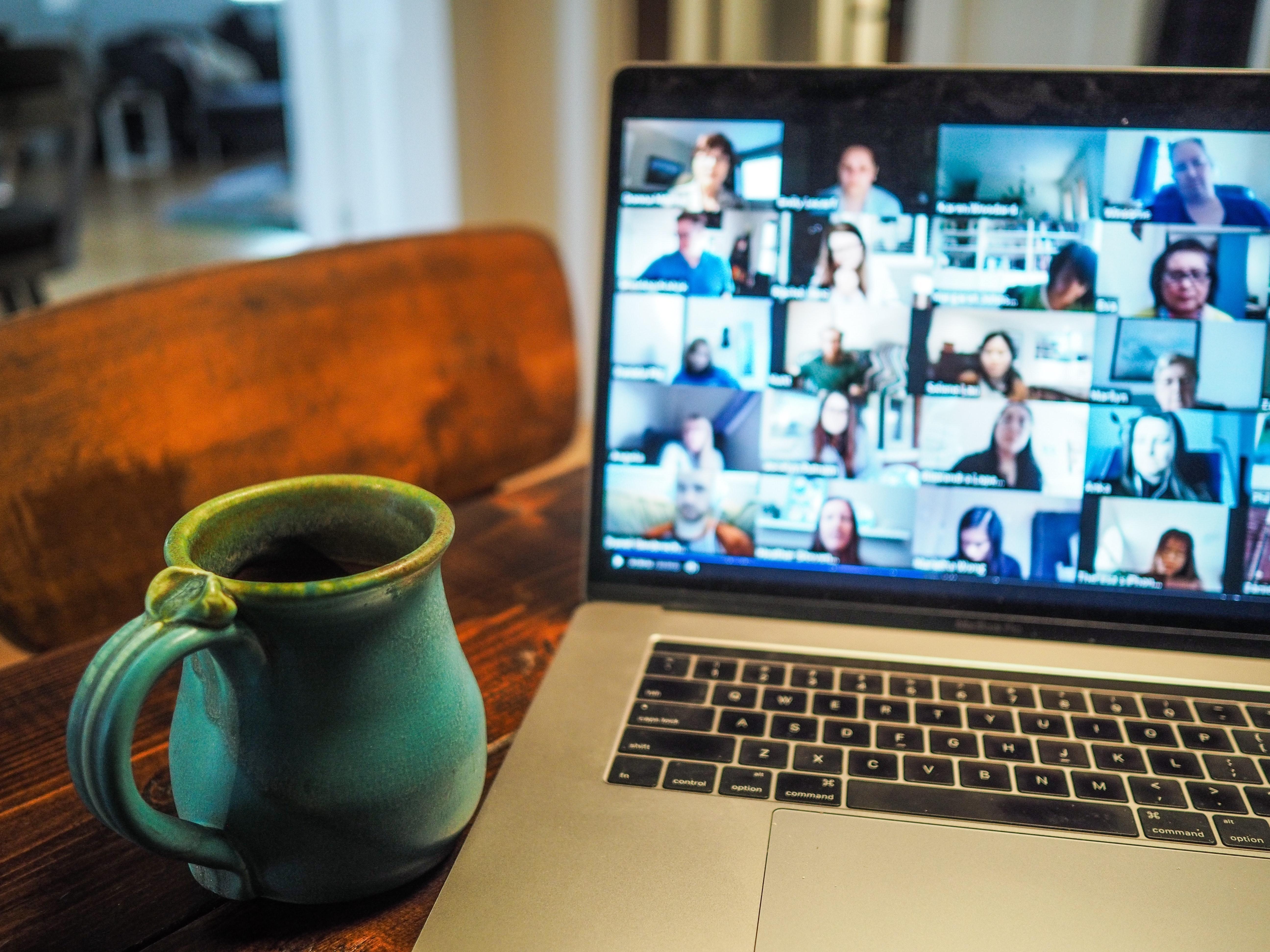
Over 3000 Professionals Gather for the Virtual Telemental Health Preparedness Summit
In May 2020, as a response to the global coronavirus pandemic, the Telehealth Certification Institute hosted the first Telemental Health Preparedness Summit, a large-scale virtual training, in cooperation with national behavioral health associations, telehealth infrastructure companies, and expert clinical trainers.
COVID-19 significantly accelerated the need for behavioral health providers to serve clients virtually, requiring that the vast majority of clinicians become immediately trained in the technical, legal, and ethical aspects of telehealth. As national experts in certifying professionals in Telemental Health, the summit offered training and CE hours, in addition to opportunities for Telemental Health Certification. The Telemental Health Preparedness Summit brought together behavioral health professionals across disciplines (including therapists, psychologists, social workers, professors, chaplains, students, etc.) to quickly and competently train on critical remote services.
In the midst of the global pandemic caused by COVID-19, there has not been a greater moment in time for telehealth services to be utilized with a variety of individuals who are experiencing feelings of isolation, stressors from the social and economic impact of the virus, restrictions with their day to day movements, and also the potential added level of control associated with domestic abuse and violence that has been brought to the forefront as a result of the virus.
Join us in examining and discussing the impact that the Covid-19 crisis has had on the state of mental health services and its subsequent impact on domestic abuse and violence with Therese Hugg, the Vice President of Therapy Services at Community Violence Intervention Center (CVIC) in Grand Forks, North Dakota. Ms. Hugg provides insight into how telehealth is being incorporated into the services that are being provided to clients of domestic abuse or violence.

HIPAA-compliant video conferencing is when a HIPAA-covered entity meets all of the requirements of the HIPAA and HITECH laws when using video conferencing with clients. The totality of HIPAA compliance is too large of a topic for this one article but we will cover specifically the HIPAA considerations of using video conferencing technology with clients.

In early 2019, the Georgia Senate passed two bills addressing telehealth and telemedicine. Both bills address comprehensive healthcare reform in order to reduce costs, increase access, and enhance quality care for Georgia residents. Since 2006, the state of Georgia has addressed telehealth parity law, and continued to address the need and coordination of telehealth care. The most recent bills (Senate Bill 115 and Senate Bill 118) continue to demonstrate how Georgia legislature has updated and revised existing laws.
"The Medical Practice Act of the State of Georgia" (SB 115) became effective on July 1, 2019. SB 115 allows for the provision of telemedicine licenses for physicians licensed and located outside of Georgia to provide care to patients who are located within the state at the time of service. SB 115 adds a new Code that defines the requirements for a telemedicine license.
Testimonials
Iveyana Kiara Smith
Jessy Hainbach
Bryant Wilson
Ben Keyser
Mei Chan
Meghan Co, LCSW-C, LICSW