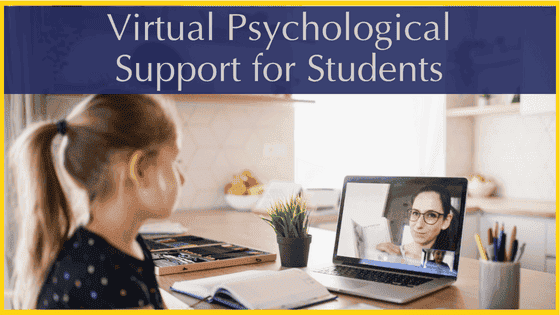
Since the COVID-19 pandemic, many educational systems have adapted their service delivery model to serve the needs of students. The impact of COVID-19 continues to disrupt traditional forms of education, and many schools and universities have turned to virtual learning to continue providing education to students. While virtual learning can offer flexibility and convenience, it can also bring its own challenges that can negatively impact students' mental health. Providing psychological support to students in a virtual context is essential to ensure their well-being and academic success.
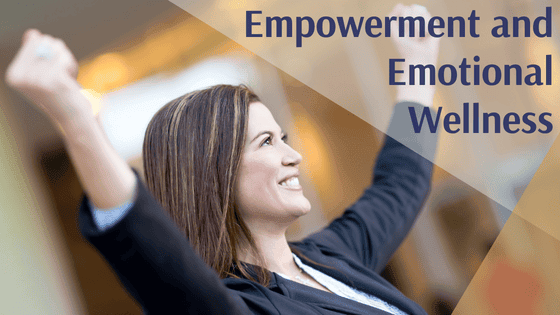
This essay highlights the advancement and necessity of an Empowerment approach for supporting help-seekers. Empowerment Psychology has its roots in community psychology, multicultural, and social work theories. The early emphasis on empowerment is associated with building up disenfranchised communities and supporting individuals through a sociopolitical lens (Rappaport, 1981). Zimmerman and Warschausky (1998) argued that the empowerment construct has inherent variance according to one's access to resources, but must include intrapersonal, interactional, and behavioral components. Various empowerment models express these components (Bakari, 2022; Cattaneo & Chapman, 2010; Masin-Moyer, Kim, Engstrom & Solomon, 2022).
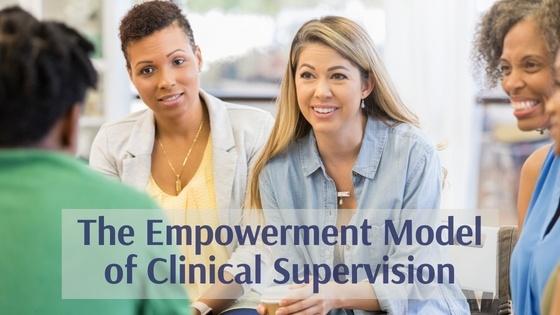
What characteristics make a phenomenal supervisor? What about a not-so-great one? It has been an amazing few years of holding space for the community’s stories of mental health and clinical supervision, including the need for something different, something modern, and something more. For many mental health professionals, we’ve had a challenging experience of feeling unsupported or unheard by a clinical supervisor. It’s an experience that feels ever more significant when we recognize that supervisors shape us as new clinicians in the field.
It Started Out Personal
Poor supervision is how my journey started. I left graduate school with an experience of supervision that felt confusing and concerning because of an absence of boundaries. Fortunately, Christina (now my co-author and co-founder) was my next supervisor in agency work and she showed me what it was like to receive compassionate support and empowered leadership, which resulted in me meeting my full potential as a young clinician. Several years into the field, I was promoted into a supervisor role and was determined to do something different for my supervisees.
Dr. Jennifer Sweeton, neuroscientist, clinical and forensic psychologist, best-selling author, and expert on trauma, talks with Ray Barrett from Telehealth Certification Institute about neuroscience and telemental health services. Dr. Sweeton offers her passion and unparalleled insight about how mental health professionals can activate neurological processes with clients using various telemental health platforms. She will both shock and inspire you with her insight about services and the ways that clients can benefit from them.
As telehealth becomes a more established practice for both clinicians and their clients, the convenience of it opens many doors to both the busy and the disabled. However, as we shift more attention to telehealth practice and develop that as an option for clients, it's important to understand the ways that cyber communication can affect both the relationship and the individual. While telehealth appointments offer many advantages to clients and clinicians, understanding the limitations of them, and the nuance of how they affect bonding and trust is key to developing trust and the ability to help your clients. People act differently, depending on their setting, and that is especially true when placed against the semi-anonymity of the internet.
Hyper Personal Effect Theory
Developed by Joseph Walther in 1996, hyper personal effect theory was a theory that came from studying the effects of commuters in mediated conversation, and it a theory that should be kept in mind when dealing with clients via text based exchanges. Walther suggests that visual and verbal cues are key components in developing relationships, and the lack of them in cyber communications can lead to deeper and intimate connections quicker than in other situations. Cyber communications can be a beneficial way of communicating with clients, but the nature of text based communication without the benefit of verbal or visual components is that there is more time to craft an image, tailor it to the perceived wants and desires of the other party, and present that image in the best possible light. Without tonal inflection to read and body language to assess, the only thing to go on is the words on a screen. It is important to keep hyper personal effect theory in mind when communicating with clients, but also when discussing their own relationships--more and more frequently, people are finding friendship and romantic relationships in online spaces, and the immediacy of the relationships found there can become an emotional problem--for clients who spend the majority of their social interactions in online spaces, understanding hyper personal effect theory and what bearing it might have on those developing relationships is an essential piece of their care.
Derek S. Landes, MSW, the telehealth coordinator of Missouri Rural Health Association (MRHA), shares insights about the use of technology to improve healthcare outcomes in rural communities. Technology tools can increase access to services, reduce barriers to care, and improve overall health outcomes in rural areas.
Rural communities struggle with many health challenges, including lower life expectancy, higher rates of poverty, and difficulties accessing specialized care. Derek S. Landes notes that improving the complicated problems of rural healthcare requires consideration of each area's specific needs and creative thinking about solutions that can benefit multiple locations. He is particularly excited about the tool of technology in bridging these gaps and improving outcomes.
Today we are talking with Mr. Scott Hutchins and Mr. Michael Leathhead of Michigan Department of Education while they share a plethora of knowledge, innovative resources, and insight regarding behavioral health needs and safety within the Michigan school district This pilot program highlights the needs of the students not only from a safety aspect but from a mental health and wellness perspective too. We also discuss the relationships between parents, students, and school-based providers and the importance of data and health information pertaining to students receiving top-notch, quality mental health services. We explore data, research, and confidential health information exchanges relating to confidentiality and exchanging information with community care partners.
AB 1759 (Chapter 520, Statutes of 2022) will go into effect on July 1, 2023. One of the changes to this law is that the California Board of Behavioral Sciences (BBS) will require that licensees who are renewing as well as new license applicants must take 3 hours of “training or coursework in the provision of mental health services via telehealth, which must include law and ethics related to telehealth.”
The required training can be obtained in one of two ways: a) from a graduate program (with written certification that the coursework meets the criteria) or b) by completing 3 hours of continuing education training from a provider that is acceptable by the BBS.
Telehealth Law and Ethics training for California BBS licensees is a one-time requirement, the coursework can be a part of a larger CE program (as long as there is proof that the required content was covered), and there is no age limit on the coursework.
With the help of artificial intelligence (AI), emerging technology is alleviating a recurring point of contention for medical professionals: how should a patient’s clinical session be documented? This subjective question often generates hundreds of different responses from clinicians in various medical fields. So, what if you could rely on accurate AI technology to automate the process for you?
That’s exactly what Dr. Robert Budman, the Chief Medical Information Officer (CMIO) for Nuance Communications Healthcare Division, talks about in this video interview with Ray Barrett from the Telehealth Certification Institute. In this interview, you’ll understand how AI has revolutionized approaches to medical documentation. Dr. Budman shares how Nuances’ Dragon Ambient Experience (DAX) technology, a complex AI neural network with millions of lines of code, ensures “tremendous accuracy for [automating] notetaking.”
We’ve invited Dr. Girija Kaimal, the President-Elect of the American Art Therapy Association (AATA), to share insights on the professional practice of art therapy, the certification process, continuing education opportunities for therapists, and how clients can benefit the most from art therapy interventions.
Art therapy prioritizes what “feels right” to the client, and what the client chooses to express is valued by the therapist. Dr. Kaimal says that this adherence to an “unconditional positive regard” for the client’s artistic experience helps the client focus on “the process, not the end art product.” This sensitivity to a broader range of expression can also require more advanced cultural competence and ways of being with clients in the therapy room.
Interestingly, Dr. Kaimal shares how art therapy first gained traction in the United States as an answer to World War II veterans who had experienced shell shock during the war and were less responsive to traditional psychoanalytic interventions that were popular at the time. Art therapy became a way to “reduce [a client’s] sense of isolation” and work through traumatic experiences.
Micah Goodman, the CEO of Enhearten, a mobile application tool that helps clients navigate the substance-use treatment process, talks with Ray Barrett from the Telehealth Certification Institute about how his company follows clients through their recovery journeys from start to finish.
Enhearten is more than a business for Goodman, and he shares with Ray what inspired the company, and he emphasizes that “we exist to help you,” nodding to the altruistic roots that informed the vision for his company.
In this video interview, Goodman talks about his vision for the company, and how it can be a benefit to both patients and providers. For Goodman, Enhearten is more than a business; it’s meant to assist clients at any point in their recovery.
One of the driving questions for Dr. Karl Benzio, the Medical Director of the American Association for Christian Counselors (AACC), is how faith-based and scientifically minded professionals can come together to “have more synergy” in the field. The AACC is an organization that brings education, advocacy, support, and clinical services to a wide array of professionals, volunteers, and laypersons who seek to integrate faith and science into their vocations.
In this video, Dr. Benzio describes how “spiritual belief system[s]” can affect a person’s decision-making ability and brain chemistry. Because of this unique connection, Dr. Benzio advocates for blending “faith” and the “scientific understanding of the mind” together into a holistic care approach. Even though he has witnessed the benefits of faith-based practices, Dr. Benzio warns that the behavioral health establishment has not completely opened the door to the spiritual domain. In response to current restrictions, the AACC seeks to inform individuals of their legal rights to use faith-based curriculums or content in their work. Clinicians also frequently struggle with knowing whether they can use personal or spiritual self-disclosures in their sessions. A common result of this uncertainty is that patients miss out on opportunities to connect with their providers on a deeper level.
Testimonials
Iveyana Kiara Smith
Jessy Hainbach
Bryant Wilson
Ben Keyser
Mei Chan
Meghan Co, LCSW-C, LICSW