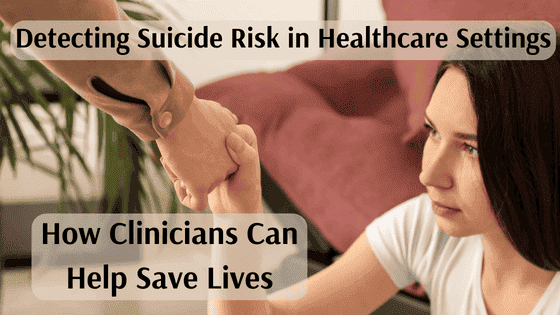
How Clinicians Can Help Save Lives
Effective suicide prevention depends on early detection so that individuals experiencing suicidal thoughts or struggles can be connected to help as soon as possible. Healthcare settings serve as a perfect opportunity to spot individuals in distress since up to 45% of people who die by suicide visit their primary care physician in the month prior to their death and 39% make an emergency department visit in the year prior to their death. Fortunately, evidence-based tools exist to identify patients who may be at risk and steps can be taken to reduce suicide mortality. All healthcare providers can play a role in preventing this leading cause of death.
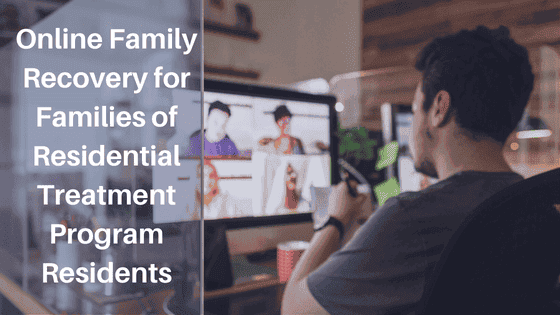
Since the COVID-19 pandemic, behavioral health services online have become a new normal of consumer expectation: clients want effective treatment in-person and online. To offer effective behavioral health services online, clinicians stay mindful of nonverbal and verbal communication, remain flexible, and adjust curriculum and process as needed.
When patients are admitted to residential care facilities for mental health or addiction issues, it is often expected that family members are part of the recovery team. Most family members do the best they can, and they often need guidance and structure to help them navigate recovery from their loved one’s illness and manage the stress and fears that come up as their loved ones approach discharge. Sierra Tucson Addiction Treatment Center is a leader in recovery from behavioral and mental illness and addiction and is committed to offering support to families of loved ones who are in treatment.
We've invited D. Kotteswara Rao, the Assistant Director of SCARF India, the Schizophrenia Research Foundation (SCARF India), a mental health center and nonprofit organization. Mr. Rao shares his experiences with telepsychiatry in rural India.
SCARF India has worked in the mental health field since 1984, when it was started by Dr. Sarada Menon, the first female psychiatrist in India, who recently passed away at age 99. The organization focuses on awareness, treatment, and rehabilitation for behavioral health of all ages- from youth to older adults. The organization has many focus areas, including research, education, and treatment. When SCARF first started nearly 40 years ago, they worked with schizophrenia because it is such a challenging condition that makes it very hard for people to live in the community and receive help. As their work progressed, the program developed additional programs to assist with other mental health conditions, such as anxiety and depression. They work toward dispelling the stigmas around mental health conditions by focusing on psychoeducation and awareness.
We've invited Duane Gordon from the Attention Deficit Disorder Association (ADDA) to discuss Attention Deficit Hyperactivity Disorder (ADHD) in adults. He has worked within the ADHD community for over two decades and is the association's president. Established in 1988, ADDA currently has over 5,000 members from all over the world. Their mission is to provide education and resources for adults diagnosed with ADHD, filling the gap in need as so many services for ADHD focus on children with this diagnosis.
We've invited Kanton Salifu Issifu, the executive director of the Community Development Alliance in Ghana, to share his insights and experiences with addressing healthcare and wellness needs in Ghana.
First, Mr. Issifu shares that Ghana is one of the most stable countries in the sub-Saharan region of Africa. Unlike nearby Mali and Burkina Faso, Ghana has remained stable with a democratic government and a peaceful environment. However, despite this stability, Mr. Issifu notes how Ghana struggles with implementing healthcare needs across the region, which is where The Community Development Alliance (CDA) steps in to fill in those gaps. CDA is an independent, not-for-profit community organization that addresses the need for supplies and services across the region, particularly in poorer communities. CDA also examines the barriers to positive healthcare outcomes and strategically collaborates with both organizations and communities to ensure both buy-in and success of their strategic efforts.
The International Society for Telemedicine and eHealth (IsfTeh) has endorsed three of TCI’s training programs.

The Mission of TCI
Founded in 2014, the Telehealth Certification Institute (TCI) offers evidence-based and comprehensive telehealth training and consultation for healthcare organizations and professionals on a range of topics related to the legal, ethical, technological, and clinical aspects of the provision of telehealth services. In our modern world, which increasingly benefits from telehealth options, TCI is proud to offer nearly 200 courses and to have trained over 40,000 professionals worldwide. We envision a world where anyone who needs a competent and compassionate telehealth professional can find one.
We've invited Dr. Mollie Gordon, Associate Professor in the Menninger Department of Psychiatry and Behavioral Sciences at Baylor College of Medicine in Houston, Texas, to share her insights on clinical care approaches for people who have been victims of human trafficking and how telehealth services can improve both training and access to such services.
Who holds accountability in our profession? Most automatically think of therapists and counselors, which is true, but they are not the only ones. Clinical supervisors support the ongoingness of the field by training the next generation of professionals to ensure the welfare of the public and support standards of care. Supervisors are also responsible for evaluating and gatekeeping for the profession. There are standards and ongoing requirements to ensure high standards of care, and yet, there are still grievances in our field.
Every year, the month of March is recognized as Social Work Month. Social Work Month is a time to not only honor the past achievements and successes in the field but also to serve as a call to action for the work ahead of us still left to do. The 2023 theme for Social Work Month is “Social Work Breaks Barriers”. Every day, social workers, and our allied health professional colleagues, help to break down barriers that prevent people from living more enriched, fulfilling lives. In addition to the direct services we provide to individuals, families, couples, and groups, we also work to advocate at a systems level to ensure that laws and policies are adopted so everyone can live safely and to their fullest potential. This year’s Social Work Month theme recognizes that there continue to be barriers of all shapes and sizes that prevent people and communities from thriving. A prime example of these barriers is seen within the lack of cultural competency for providers working with LGBTQIA+ (Lesbian, Gay, Bisexual, Transgender, Queer/Questioning, Intersex, Agender/Asexual, and other members of the community who identify with a sexual orientation or gender identity that isn’t included within the LGBTQIA acronym) clients and the socio-political environment surrounding transgender and non-binary individuals, especially youth, in our country.
We’ve invited Dr. Whitney Wall, psychologist, and instructor, to speak about pursuing higher education options in psychology and counseling. While there are many options to pursue this work, researching and following these options can be daunting. Increased virtual learning programs create even more options and choices.
We've invited Natalie Kemp to talk with us about her observations of the decrease in adolescent resiliency following the COVID-19 pandemic and how to increase resiliency factors for today's youth. Natalie is very involved in community work and is passionate about working with young adults and adolescents and is part of the REACH program in her community, which stands for Resilience Education: Awareness for Coping & Hope.
Technology in Couple and Family Relationships
I can remember the first time I ever used the Internet. I was just starting high school, and my parents had gotten a computer with something called “Prodigy”, an online service allowing dial-up connection to the Internet. I can still hear the sound of the modem waiting for the screen to come up, the anticipation of when the connection would be made, and being amazed I could write a report without looking up something in the musty, nearly complete set of Funk & Wagnalls New Encyclopedia in the dank and webby basement. No disrespect to Funk & Wagnalls, but there was something more magical about being able to have information with the satisfying click of a keyboard.
Fast forward 30 years: I have built a career on investigating how that little click of a mouse and the buzz of a modem coming to life has impacted nearly everything we do in our relationships. The speed with which we have adopted our technologies is unlike any other advances in modern life including the Industrial Revolution. The world has exponentially adopted Internet technologies at an astonishing rate. For example, Asia has the highest number of Internet users with close to 3 billion. Closer to home, nearly 94% of the North American population is connected (Internet World Stats, 2023).
Testimonials
Iveyana Kiara Smith
Jessy Hainbach
Bryant Wilson
Ben Keyser
Mei Chan
Meghan Co, LCSW-C, LICSW