
Differential Diagnosis in the DSM Framework: Principles and Clinical Application

Payment Options:
Credit Card, PayPal, Venmo, or Pay Later (4 payments)
Rewards:
You earn 10% on all of your orders towards your next purchase.
The add to cart button will appear once you select the values above
Specifications
This course does not offer CE Credits. The same course is available for purchase and offers 1 CE hour for behavioral health clinicians. See "related products" below.
When a client’s symptoms fit several DSM categories, choosing a diagnosis requires more than matching a checklist. Similar complaints can reflect different clinical patterns, substance or medication effects, medical conditions, or responses to life circumstances. Pressure to settle on an explanation quickly can narrow the assessment before the picture is clear. A thoughtful differential process helps clinicians weigh competing explanations while remaining open to information that could change their conclusions. This one-hour online course offers behavioral health professionals a focused review of diagnostic reasoning and its role in case formulation. Whether you are revisiting graduate training or seeking a more consistent approach to complex presentations, the emphasis is on organizing information and identifying what needs further assessment. These foundations support thoughtful diagnostic decisions while keeping the client’s experience and circumstances central to the work. Jason Buckles, Ph.D., LPCC, brings over 25 years of counseling experience and more than two decades of teaching DSM-based assessment and treatment planning. His background includes serving as Statewide Clinical Director of the New Mexico Department of Health’s Bureau of Behavioral Support and teaching DSM Assessment for Counselors at New Mexico Highlands University. His clinical and consultation experience, including work with people with intellectual disabilities, informs his attention to diagnostic overshadowing and the effects of multiple, potentially conflicting diagnoses. Drawing on this background, he connects diagnostic concepts to the questions clinicians face when a client’s history is incomplete, symptoms overlap, or earlier diagnoses need to be reconsidered. Through clinical examples and a systematic framework, Dr. Buckles shows how a working diagnosis can be tested and refined as the client’s story becomes clearer. The DSM provides a shared language for describing patterns, while individual case formulation helps explain what those patterns mean for this person at this time. Attention to medical and substance-related explanations reinforces the value of appropriate referral and collaboration. The approach encourages clinicians to make reasoned decisions, document uncertainty, and plan reassessment when the evidence remains incomplete. Understanding overlapping symptoms requires attention to the client’s experience over time. A complaint such as difficulty sleeping becomes more informative when considered alongside the person’s usual functioning and the circumstances surrounding the change. Building a timeline together and seeking collateral information with appropriate permission can help clinicians test an initial impression, especially when prior labels have shaped expectations. This perspective also encourages reconsideration when diagnoses accumulate without a coherent explanation. By connecting symptom patterns with cultural context and the person’s own understanding of distress, clinicians can better consider whether a disorder is present, what remains uncertain, and how diagnostic language may affect the client. A clearer diagnostic process starts with asking better questions and allowing room for the picture to evolve. Register to revisit the foundations of differential diagnosis with Dr. Buckles and strengthen the reasoning you bring to assessment and reassessment. For behavioral health professionals navigating overlapping symptoms and incomplete histories, this training offers a practical way to approach uncertainty with greater care. This is a non-interactive, self-study program and consists of an hour of video instruction and an evaluation. From the time of registration, you have six months to access the coursework. This course is intended for clinicians who provide behavioral health services. This is a non-interactive, self-study course. Teaching methods for this course include recorded lectures, videos, and a course evaluation. Course access and completion instructions. Originally from Cleveland, Ohio, Jason earned his Bachelor’s in Psychology at New York University in 1996. While there, he worked on diagnostic projects at Bellevue Hospital and the New York State Psychiatric Institute. He earned his Master’s in Counseling at The University of New Mexico in 2001 and his Ph.D. in Special Education at The University of New Mexico in 2016. His dissertation focused on the experiences of direct support professionals who support people with sexually challenging behavior. Since 2002 Jason has been the owner of Talkabout Inc., a Behavior Consultation agency specializing in support for people with intellectual disability and concurrent mental health diagnoses. From 2012 through 2016, Jason was the Statewide Clinical Director of the New Mexico Department of Health – Bureau of Behavioral Support, overseeing statewide systems of behavioral support consultation. From 2016-2019 Jason was the Executive Director of A Better Way of Living, a CQL-accredited agency that provides life-wide supports for people with intellectual disability. He is currently a contracting consultant with the New Mexico Department of Health, where he supervises the sexual risk screening program, and the ongoing development of behavior support systems, and provides statewide trainings on co-occurring mental health conditions for people with intellectual disability, among other topics. For several years Jason has also served as the Program Manager for the Developmental Disability/Mental Illness project with the University of New Mexico. For most of the past 20 years, he was a part-time instructor at both The University of New Mexico, teaching Introduction to Intellectual Disability, and at New Mexico Highlands University, teaching DSM Assessment for Counselors. The instructor(s) for this course receive compensation for their services. There are no reported conflicts of interest to disclose. This course does not offer CE credits, just great content. The same course is available for purchase and offers 1 CE hour for behavioral health clinicians. See "related products" below. This course is a non-interactive, online self-study. Participants may request a printed version of their certificate of completion to be delivered by mail. A shipping/handling fee of $6.95 will be charged per request. Shipping internationally may require an additional charge. Close Captioning is available for live webinars and recorded video presentations. You can click on the following links to view our policies:Description
Key Takeaways:
Why This Course?
Learning Objectives
Format and Access
Course Details
Availability:
Who Should Attend:
Teaching Methods:
How to Attend:
Instructor and Disclosures
Instructor
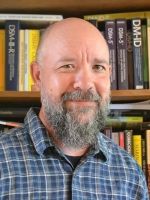
About Jason Buckles, Ph.D., LPCC
Disclosure Statement:
CE Hours
Credit Hours:
Accommodations and Policies
This course was recorded 11/6/26
Related products

Testimonials
Iveyana Kiara Smith
Jessy Hainbach
Bryant Wilson
Ben Keyser
Mei Chan
Meghan Co, LCSW-C, LICSW